Agent Charter: Creating an AI Governance Framework to Ensure Operational Reliance
Without a framework to guide decision-making, escalation and accountability, even the most promising AI initiatives risk stalling—or worse, creating hidden exposure.


Without a framework to guide decision-making, escalation and accountability, even the most promising AI initiatives risk stalling—or worse, creating hidden exposure.
Benefits is one of the fastest-growing revenue streams for agencies, but it is also one of the most process-heavy. Intelligent automation is beginning to shift that.

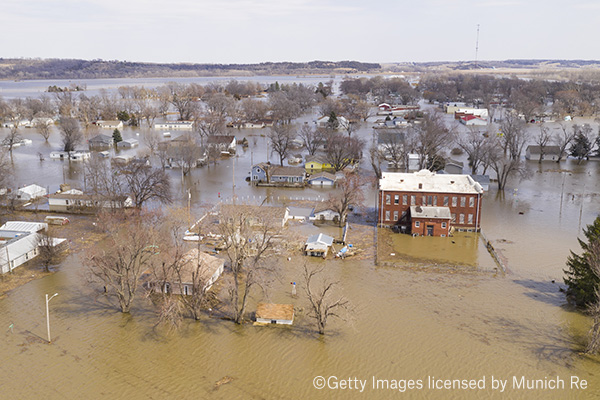
Most property owner policies exclude flood damage, creating serious financial risk. Flood insurance helps protect families, stabilize communities, and speed recovery after devastating flood events.
Here are three practical ways agents can use AI for promotion without feeling overwhelmed or losing control.

The agencies that have adopted artificial intelligence (AI) successfully didn’t start with a big rollout; they started with a conversation with their staff first, then with their clients.

Flooding isn’t a coastal issue—it’s everywhere. Help property owners see the gap: standard policies exclude flood. Munich Re U.S. offers options to protect what matters most—before the next storm.

Flooding isn’t a coastal issue—it’s everywhere. Help property owners see the gap: standard policies exclude flood. Munich Re U.S. offers options to protect what matters most—before the next storm.

A homeowner had a loss where the HVAC system’s condensate pump failed due to a mechanical breakdown. The HO3 policy with an equipment breakdown endorsement—form 16016—with a separate $500 deductible appears to indicate the condensate pump and the resulting water damage should be covered under the equipment breakdown endorsement. The insurance carrier says otherwise.

Flood risk is rising far beyond flood zones, leaving millions of properties exposed. Agents play a critical role in helping property owners understand risk, coverage gaps, and modern flood insurance options.

A large portion of the industry continues to operate on core platforms designed around nightly batch cycles. Those systems were built for stability and auditability, not instantaneous updates.