How Agents Can Help Clients Navigate Growing Flood Risks
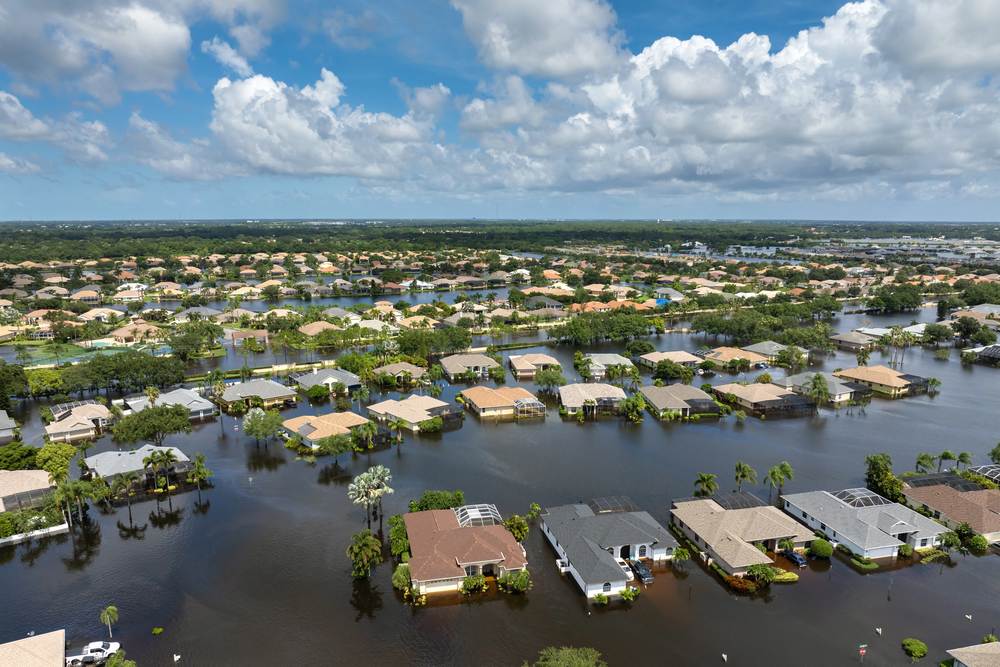
In 2024, floods caused more than $8 billion in damage to homes and businesses nationwide, according to FEMA, which reported that $3.8 billion was in communities not considered high-risk.
Affecting both residential and commercial properties, the increasingly complex and constantly evolving flood environment is creating challenges for carriers, agents and clients.
“Recent heavy rainfall events in places like Vermont, Asheville, and across parts of Texas have shown that serious flooding is not just a coastal issue,” says Nakita Persaud, CEO and co-founder of Ric, an extreme weather MGA.

Agent Toolkit: Combat Legal System Abuse
“Streets, small towns, and inland neighborhoods are going underwater after a few days of extreme rain,” she says. “That is moving the conversation away from ‘Do I live near the coast’ to ‘What happens if we get 8 or 10 inches of rain,’ and it is making rainfall a pressing topic in insurance discussions.”
Further, “flooding is also no longer driven primarily by hurricanes,” says Cassie Masone, vice president, flood operations at Selective. “Intense rainfall, flash floods, and severe convective storms are causing significant losses well outside mapped hazardous flood zones, putting even traditionally ‘low‑risk’ properties—especially those near any water source—at increased risk.”
Flooding is now the costliest natural disaster in the U.S., occurring more frequently than any other kind of natural disaster in the U.S. and accounting for about 90% of all natural disaster events, according to FEMA. As a result, the independent agent’s role as a trusted advisor has become increasingly important in educating and advising clients.
“Independent agents are playing a much more advisory role in today’s flood insurance market,” says Richard Folkman, vice president, CAT operations, flood & carrier practice leader, Crawford and Company. “As flood risk becomes more complex and less tied to traditional flood maps, agents are often the ones helping customers understand their real exposure, not just whether insurance is required.”
While FEMA flood maps are the foundation for identifying and insuring flood risk, there are limitations.

Partner with the Big “i” to offer flood insurance.
“Our traditional tools were built for a world of coastal and river flooding, not today’s mix of urban flash floods, aging drainage and sudden heavy rainfall,” Persaud says. “A meaningful share of National Flood Insurance Program (NFIP) claims now comes from outside high-risk zones, which shows maps alone are not enough.”
“For independent agents, all of this raises the bar on how flood is explained and how coverage is layered,” Persaud says. “The risk picture is more dynamic, so the protection strategy has to be more dynamic too.”
Communicating clearly and early with clients is key to ensuring clients understand their flood risk.
“Independent agents are the backbone of flood insurance communication and understanding, particularly as many customers are unaware that their homeowners insurance does not cover flooding and that they need a separate flood policy,” says Trevor Burgess, CEO of Neptune Flood. “They’re also critical in explaining that the NFIP is not the only option they have.”
Through both the NFIP and the private flood insurance market, agents can meet their clients’ evolving coverage needs.
“Agents are helping clients navigate coverage choices, timing issues and tradeoffs between cost and protection,” Folkman says. “Just as importantly, agents are increasingly educating homeowners who don’t see themselves as being in a flood zone but are still vulnerable to flooding from heavy rainfall and severe storms.”
“That’s shifting the flood insurance conversations from a box-checking exercise to a broader risk discussion,” Folkman explains.
Further, from an operational standpoint, “to protect consumers, and to mitigate agents’ own errors & omissions exposure, insurance professionals must take a more proactive approach,” Masone says. “This includes reviewing entire property portfolios, both personal and commercial, with close attention to changes in surrounding topography, land use and environmental conditions that may have altered flood exposure since policies were first written.”
Additionally, agents should stay current with industry developments and enhancements that directly benefit their flood insurance clients. Most recently, the National Oceanic and Atmospheric Administration (NOAA) announced that its experimental Flood Inundation Mapping (FIM) tool has expanded to serve 60% of the U.S. population, up from 30% in 2024.
The FIM provides near-real-time, high-resolution, street-level visualizations of flood waters to assist forecasters in issuing flood watches and warnings.
The reality of flood risk is more complex, constantly evolving, and often extends far beyond the official boundaries shown on flood maps.
“As the flood risk environment evolves, too many homeowners fail to fully recognize their level of exposure,” says Summer Cole, assistant vice president, Alliance Gold, Big “I” Advantage. “Independent agents are vital in educating clients, identifying and addressing coverage gaps, and helping families secure the protection they need.”
Olivia Overman is IA content editor.
Agency Management Solutions
Insurance Markets
Big I Programs
This month’s issue

The October issue is out now!