Reconstruction Costs Decelerate as Personal Lines Premium Increases Slow
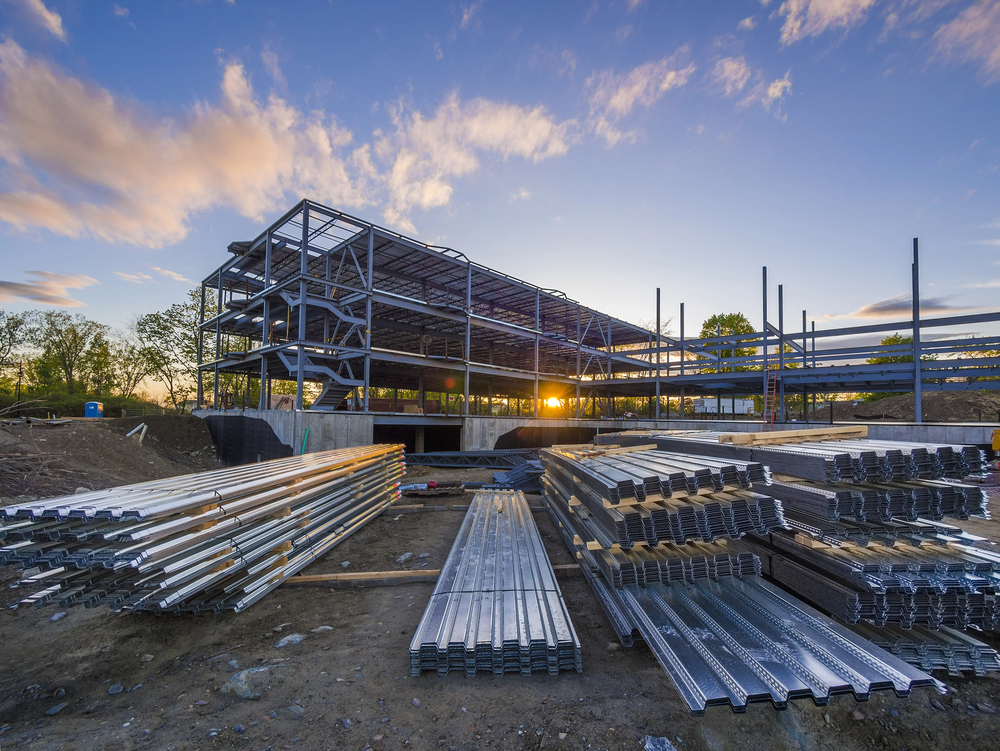
Reconstruction cost increases are beginning to ease across both residential and commercial properties, offering some relief after years of steep inflation driven largely by labor and materials pressures. At the same time, rate increases for auto and homeowners policies have fallen back toward pre-pandemic levels.
Total reconstruction costs in the U.S. increased by 3.6% from April 2025 to April 2026, a significant drop from the 5.2% increase over the previous 12-month period, according to a new Verisk report.
Verisk’s “360 Value Quarterly Reconstruction Cost Analysis: Q2 2026” found that total residential costs increased by 3.2% from April 2025 to April 2026. Every state saw residential reconstruction cost increases, with the District of Columbia seeing the largest at 5.7%, followed by Indiana at 4.6% and Kansas at 4.6%.

Shape the Big “I” Agents Council for Technology 2027 Tech Trends report
Meanwhile, total commercial reconstruction costs increased 4.1% from April 2025 to April 2026. Rhode Island saw the largest increase at 6.4%, followed by Oklahoma at 5.8% and Iowa at 5.22%.
Reconstruction costs are being driven by labor pricing, Verisk found. Material pricing saw relief through 2025, with overall material cost growth slowing and even declining in some categories. However, material costs rose 3% from April 2025 to April 2026, with interior trim material increasing 5.7% and paint composite increasing 3.7%. Other materials, including roofing, carpet and drywall, increased by less than 1% year-over-year. Lumber dropped by 2.3%.
From a quarterly perspective, materials prices increased 0.5% from January to April 2026, with paint composite, interior trim and metal roofing seeing modest increases, while lumber, concrete and roofing saw decreases.
Labor pricing is a different story, with “public infrastructure spending, prevailing wage requirements, and long-duration projects sustained high labor demand, particularly in states with constrained construction workforces,” Verisk’s report said.
Combined hourly billable labor costs rose by 3.6% from April 2025 to April 2026, with concrete masons seeing a 14.5% increase year-over-year. Heating and air conditioner mechanics and carpenters both saw increases of 3.7%.
From January to April, labor costs rose 1%. Drywall installers and finishers saw a 1.3% increase in their wages, followed by concrete masons at 1.3% and carpenters and general framers at 1.1%.
Looking ahead, Verisk predicts that residential reconstruction costs will see a 1.8% increase between April 2026 and October 2026, but commercial costs will see a 1.5% decrease.
Personal Auto, Homeowners Rates Return to ‘Pre-Pandemic Levels’
Premiums for personal auto and homeowners policies are showing signs of deceleration as well, according to AM Best’s May 18 financial review. In the personal auto market, the average approved rate increase in 2025 was 3.7%, down from 9.7% in 2024. The homeowners market’s average approved rate increase in 2025 was 8.3%, down from 13.5% in 2024.
“After years of large rate increases to keep up with elevated losses, 2025 marked a significant shift back to pre-pandemic levels,” AM Best said.
After the pandemic, supply-chain issues and a surge in inflation caused personal auto underwriting losses of more than $54 billion from 2021 to 2023, with 2023 clocking a loss of $16.9 billion. However, premium rightsizing led to underwriting profits of $13.9 billion in 2024 and $28.9 billion in 2025. AM Best also points to improved loss frequency and severity in 2025.
On the homeowners’ side, increased frequency of severe weather-related catastrophes led insurers to incur $35 billion in total aggregate underwriting losses from 2018 to 2023. Homeowners insurers saw a $1.3 billion loss in 2024—not the significant improvement experienced by the personal auto market, but still much better than 2023’s $15.2 billion loss.
2025 brought a $16 billion underwriting profit, the first in five years. AM Best notes that reinsurance improvements and relief from landfalling hurricanes helped these results.
AnneMarie McPherson Spears is IA news editor.
News Types
Insurance Markets
This month’s issue

The October issue is out now!