2026 Is the Year of the COO

By Michelle Buswell
Operational success doesn’t happen by accident. It happens by design and execution. A well-oiled C-suite is vital. A role that’s often more behind the scenes, but will be crucial to success in 2026, is the chief operating officer.
The COO works in partnership with peers to set the vision and direction, but also ensures the vision becomes a reality by aligning people, processes and performance. COOs act as the bridge between strategy and execution. They translate strategy into execution, oversee day-to-day operations, ensure the operations run efficiently, facilitate communication and collaboration across departments, represent the voice of the customer and employee and drive transformation. It’s no easy task.
The COO has gained greater visibility over the last few years, as AI’s influence on operations has made it imperative to have effective strategies in place. According to the “2025 Digital Trends in Operations Survey” from PwC, 57% of operations and supply chain leaders have integrated AI into selected functions or throughout their organizations.
More from the January Issue


Further, in 2000, 48% of Fortune 500 and S&P 500 companies had a COO, according to McKinsey. But by 2018, that number had dropped to an all-time low of 32%. However, in 2022, that number rose back to 40%. Both peaks coincide with accelerated technological advances during the dotcom and internet boom, and the rise of AI.
Banner Life and William Penn’s CEO and president, Mark Holweger, called the AI age “the industrial revolution on steroids,” where the pace of change is the biggest challenge these days. This amount of upheaval is leading to change fatigue plaguing companies.
All companies are on an AI journey, facing similar challenges in safely integrating it into their ecosystems. There are obvious challenges, and more subtle ones that executives can miss.
Obvious challenges include navigating AI standards to ensure compliance with emerging U.S. state regulations and that AI is used safely and ethically; striking the right balance between governance and degree of control; and the need to ensure quality data is accurate and unbiased.
Meanwhile, hidden challenges include avoiding change fatigue through strategic change management and workforce management techniques; ensuring visibility and oversight of AI features deployed by third-party vendors and partners; and workplace culture and company sentiments around the use of AI at various levels.
However, AI isn’t the only issue at hand. Companies often talk about the importance of growth strategies, but risk management is equally essential for achieving sustainable growth. Without proper risk management around cybersecurity, data management, technology usage and more, growth is incredibly fragile.
Streamlining operations is often viewed as merely a cost-cutting measure. Still, it can and should be viewed as a growth driver—reducing unit costs and ensuring the operation is scalable will free up time and money to invest in other innovative initiatives. Adding to the mix, all companies are fighting for talent. That’s nothing new; organizations want the best minds representing their brand. But it’s not just about finding the right people; it’s about making sure they have the right skills and sitting them in the right chair.
There has never been a better time than now to be in operations. Technology is here to improve internal and external experiences, and it’s gratifying to see operations staff develop skills in areas we have never seen before. That is the evolution of the COO, and 2026 will be a banner year.
Michelle Buswell is COO of Banner Life and William Penn. CN11122025-2.
Categories
Agency Management Solutions
This month’s issue
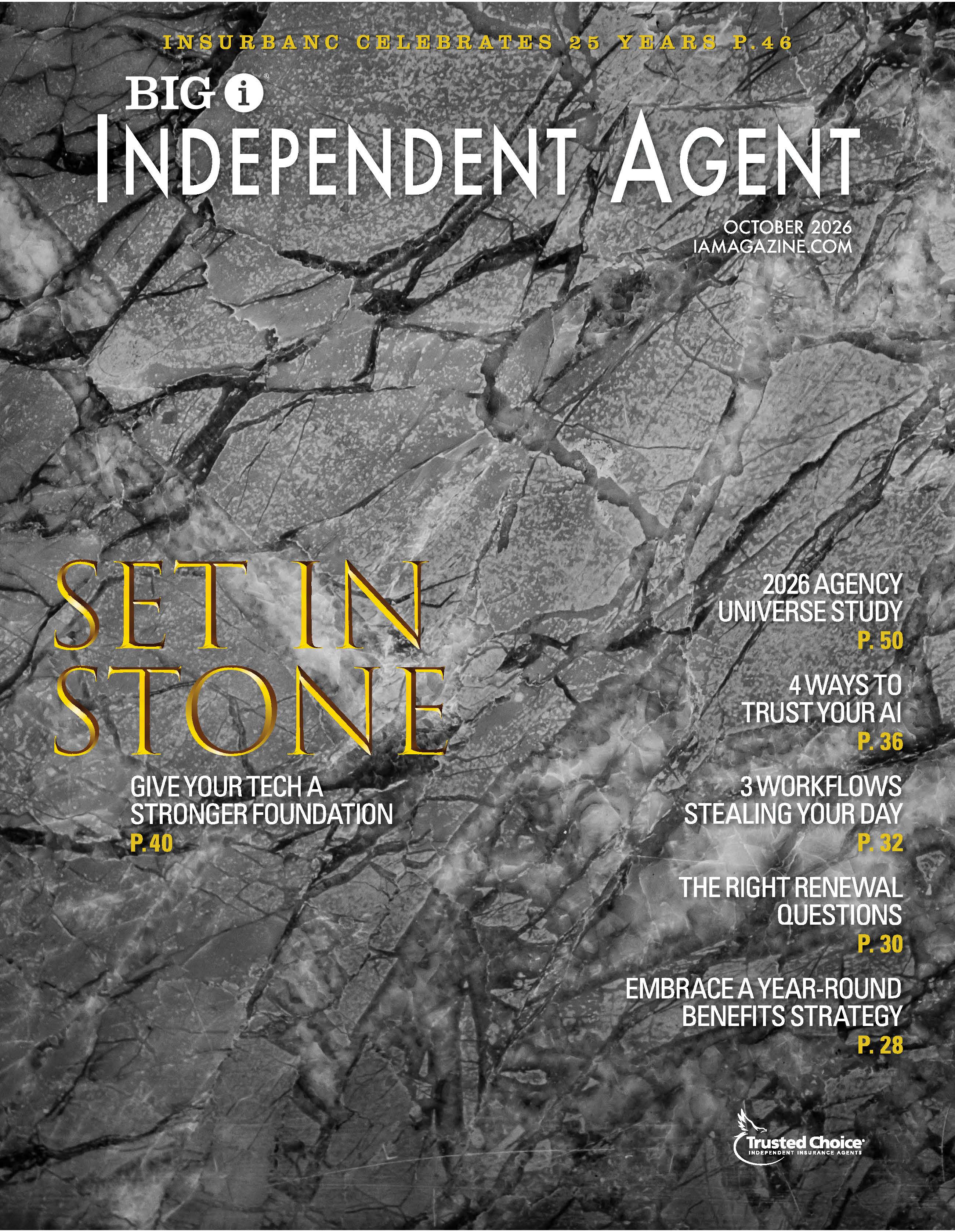
The October issue is out now!