ACT Agency AI Labs: How Real Agencies Are Using AI

By Kasey Connors
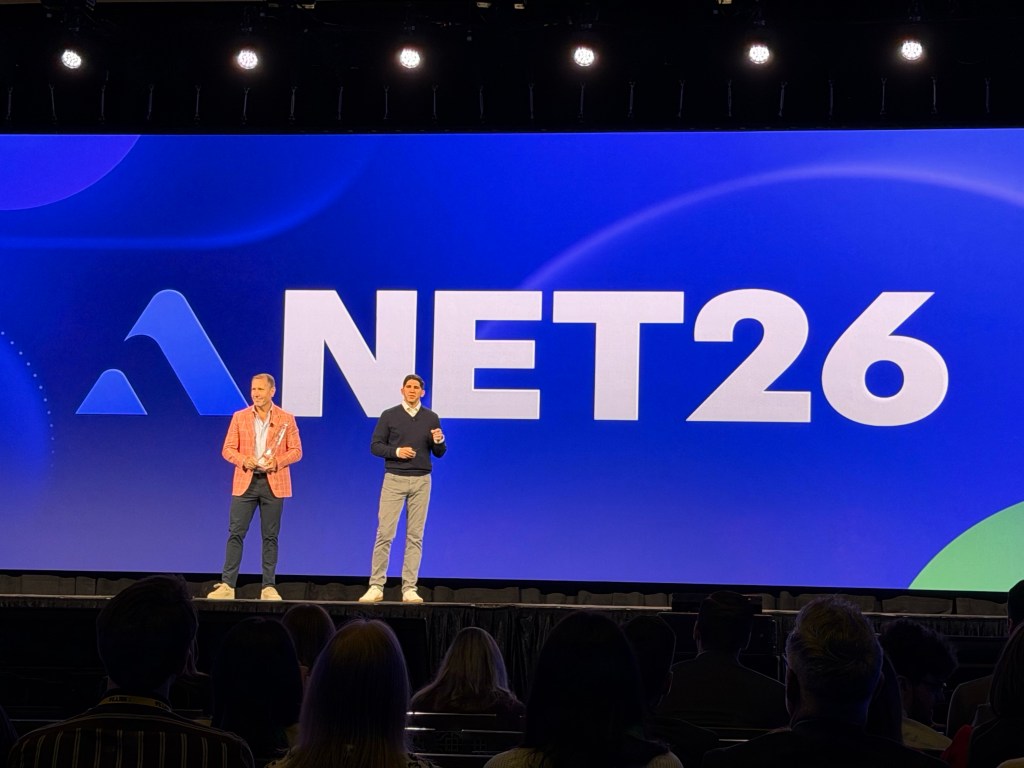
Last month, the Big “I” Agents Council for Technology (ACT) hosted the first phase of its Agency AI Labs, a free live learning program designed to meet independent agency staff where they are to discuss practical skills and real workflows.
The first phase—focused on laying the foundations for artificial intelligence (AI)—attracted more than 800 registrants from more than 670 unique agencies across 49 states. Seven in 10 participants were agency owners, principals or managers. Among those registered, over 70% were already using AI. Their use cases were consistent across every session: Email and client communications led by a wide margin, followed by policy comparison and review, proposals and prospecting, research, and marketing content.

Agent Toolkit: Combat Legal System Abuse
However, a smaller but growing group has started building custom agents and workflows rather than just chatting with a tool, which is a clear signal that some in this audience are ready to move past the basics. ChatGPT is the most popular program choice, with Microsoft Copilot close behind, largely a function of how many agencies already run on Microsoft 365. Claude is gaining ground fast among the more advanced users.
As the labs progressed, two crowds diverged. Attendees who don’t already use AI are asking different questions from those actively using AI. Those who don’t use AI want a clear, low-risk first step and permission to believe they haven’t missed the window. Meanwhile, active users want peer benchmarking, governance frameworks and help moving from chat-based use into building their own tools.
Getting agents to the next level meant giving both groups something to act on immediately.
In the session “Prompting: How to Actually Talk to AI,” Manny Barbosa, advisor at Agent for the Future, provided a simple structure for building any request so AI gives you a usable answer the first time instead of a generic one that requires rewriting, which 42% of attendees had never tried.
Further, more than a quarter didn’t know AI could confidently hand back something flat wrong. That’s not a minor gap and an example of why “getting better answers” and “protecting the agency from errors & omissions nightmares” are actually the same conversation.
That conversation continued in the session “AI Governance: Protecting Your Agency and Your Clients,” led by Jason Gobbel, chief solutions officer at Kite Technology Group. During the session, 62% of attendees admitted their agency has no AI acceptable use policy, and another 15% weren’t sure—this was from a crowd where 61% were already using AI daily.
More on AI


Gobbel shared the AGENCY framework: a structured, six-component approach that moves an agency from assessing what AI is actually in use, to assigning clear roles and responsibilities, to a usable acceptable use policy. He paired the framework with a five-week plan that starts with an honest inventory of what tools staff are already using. Several attendees said they’d have it in front of their leadership team within the week.
The final session, “AI Workflows and Use Cases for Agents,” made the stakes concrete. The session was led by two agents—Kimberly Fox, commercial lines operations leader at O’Connor Insurance in Charlotte, North Carolina; and Walker Ross, account executive at G.R. Little Agency in Kitty Hawk, North Carolina—and supported by John Hermann, director of systems and technology at Insurance Marketing Agencies.
A live poll asked attendees whether they had every agency process documented. Eighty-six percent said no, which became the thesis of the session because undocumented AI use is an E&O exposure most agencies don’t realize they’re carrying.
In response to AI adoption, carriers have begun adding AI exclusions to policies over the past year, and industry-standard exclusion language is increasingly being adopted. An agency that can’t show what its AI-assisted processes actually are—what data went in, what a human reviewed, what got sent to a client—has no way to defend itself if a claim ever turns on that question.

Use AI Without Losing the Human Touch
The fix, demonstrated live in the session, was a versioned standard operating procedure (SOP) generator. The template documents a process and tracks every change made to it over time. For many attendees, this was their biggest takeaway.
Here are five things that can move an agency to the next level in AI implementation:
1) Write an AI acceptable use policy before the next tool gets added. An AI acceptable use policy is the fastest way to close the gap, according to the 2026 ACT Technology Trends Report.
2) Run the AGENCY framework’s first step this week. Watch the recording of “AI Governance: Protecting Your Agency and Your Clients” and create an inventory of the AI tools your staff is already using informally. Most agency leaders are surprised by the answer. The results are the foundation on which everything else is built.
3) Document one workflow this month. Not all of them—one. Watch the recording of “AI Workflows and Use Cases for Agents” to learn about the difference between a full SOP and a swim-lane map. Either approach will get you started in writing down the process currently living in someone’s head.
4) Ask your E&O carrier the AI exclusion question directly. Don’t wait to find out the answer during a claim.
5) Move one staff member past email drafting. The tools that actually change agency economics—policy comparison, custom agents and automated workflows—need someone willing to go past the entry-level use case.
In August, ACT’s AI Labs will move into discussions of how agencies can use AI to grow, with new content on producer productivity, service automation and capacity management. Phase 2 registration is now open—visit ACT’s Agency AI Labs webpage to save your spot.
Kasey Connors is executive director of the Big “I” Agents Council for Technology (ACT).
News Types
Agency Management Solutions
Big I Programs
This month’s issue
The October issue is out now!