APCIA Annual Meeting 2025: Industry Competition, Affordability and Legal System Abuse
Last week, the American Property Casualty Insurance Association (APCIA) hosted its annual meeting in Orlando, Florida.
Although the NYDFS Cyber Regulations may not apply directly to your business, independent insurance agencies operating in other jurisdictions could still see impacts.
The bipartisan bill directs the Health and Human Services (HHS) Secretary to update regulations for independent agents, brokers and third-party marketing organizations (TPMOs) under Medicare Parts C and D.
Last week, a bill was reintroduced to clarify the jurisdiction of the Consumer Financial Protection Bureau (CFPB) and affirm that state regulators are best positioned to oversee the insurance industry.
The guidance was set to take effect on June 1 and would have required mortgagors to acquire replacement cost value coverage for their property, including roofs, deeming actual cash value unacceptable.
The Department of Labor (DOL) announced a final rule that will subject the financial services industry to new requirements designed to protect retirement investors from receiving bad or self-interested investment advice.
Independent insurance agents who are considering the impact of the new regulation on their agencies and firms should consider some of the rule’s key elements and certain revisions that were incorporated in the final text.
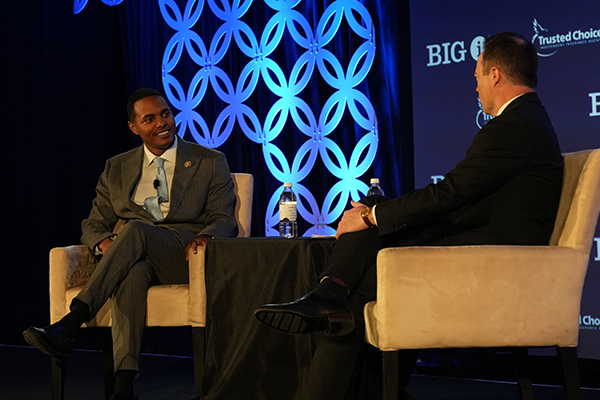
Rep. Ritchie Torres (D-New York), spoke to Big “I” members about the importance of civil discourse in politics, reaching across the aisle for the good of the country, and building and leveraging relationships.
The bill will require the Government Accountability Office (GAO) to conduct a study on wildfire damage, the existing state of insurance coverage, possible government mitigation responses, and the challenges faced by private insurers.
The act would prevent the Consumer Financial Protection Bureau from pursuing enforcement against any person regulated by a state insurance regulator.