Does a BAP Cover Towing Non-Owned Trailers?
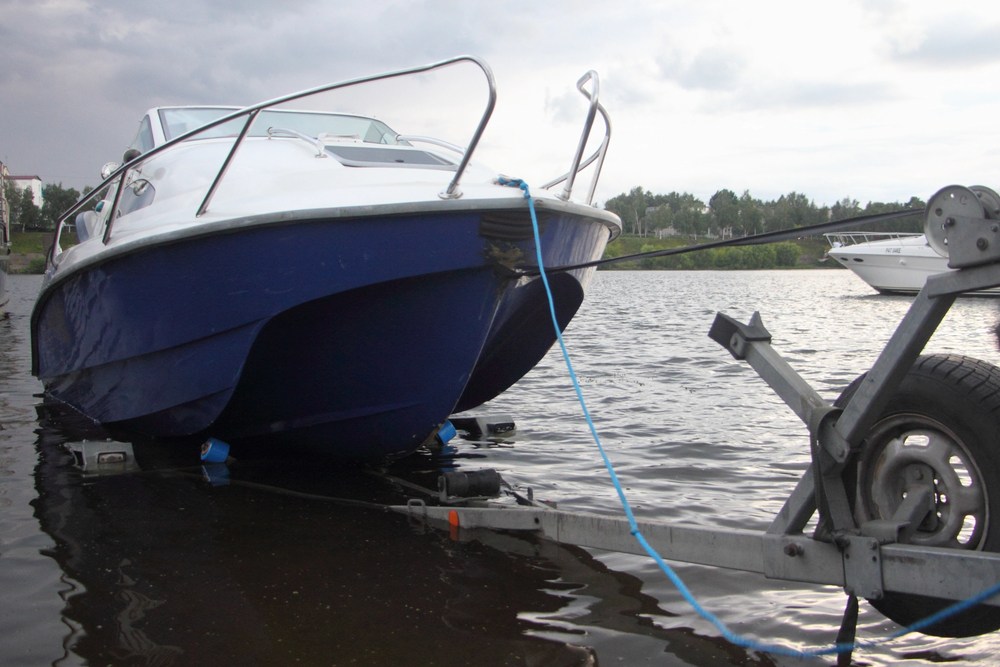
Q: An insured owns a marina. During the course of operations, they will tow a non-owned trailer, with or without the boat on the trailer. The towing will take place on the marina’s property but will occasionally cross a public road.
The insurer will not give the agency a definitive answer about coverage. However, the business auto policy appears to limit coverage to certain trailers:
C. Certain Trailers, Mobile Equipment and Temporary Substitute Autos
If Liability Coverage is provided by this Coverage Form, the following types of vehicles are also covered “autos” for Liability Coverage:
-
-
-
- “Trailers” with a load capacity of 2,000 pounds or less designed primarily for travel on public roads.
-
-
All boat trailers have more than a 2,000 gross vehicle weight (GVW). Does that mean boat trailers are excluded even on a Symbol 1? A Symbol 4 is presumably a less broad symbol yet has coverage for “any trailer.” And what about instances of a tractor towing a boat instead of a vehicle? Does the commercial general liability policy provide coverage?
Response 1: I assume the question is limited to liability coverage. There is automatic coverage for a non-owned trailer of any size if the policy declarations show Symbol 1 for liability. There is also automatic coverage for a non-owned trailer of any size while it is connected to a power unit the named insured owns if the declarations show Symbols 2, 4 and 7.

Shape the Big “I” Agents Council for Technology 2027 Tech Trends report
Otherwise, there is automatic coverage for a trailer only if it has a load capacity of 2,000 pounds or less and is designed primarily for travel on public roads.
Note, however, that the BAP Condition 5: Other Insurance says that coverage for a covered trailer the named insured does not own is excess over any other collectible insurance if it is connected to a motor vehicle the named insured does not own. It is primary if it is connected to a motor vehicle the named insured does own.
Therefore, there is automatic excess coverage for the types of trailers you described if the declarations show Symbol 1, or if the declarations show Symbols 2, 4 or 7 and they are connected to power units the named insured owns.
Regarding the trailer pulled by a tractor, this might fall under the CGL coverage form’s definition of “mobile equipment”:
-
- “Mobile equipment” means any of the following types of land vehicles, including any attached machinery or equipment:
b. Vehicles maintained for use solely on or next to premises you own or rent;
f. Vehicles not described in a., b., c. or d. above maintained primarily for purposes other than the transportation of persons or cargo.
However, “mobile equipment” does not include any land vehicles that are subject to a compulsory or financial responsibility law or other motor vehicle insurance law in the state where it is licensed or principally garaged. Land vehicles subject to a compulsory or financial responsibility law or other motor vehicle insurance law are considered “autos.”
What Do The Experts Think?


If state law requires the trailer to be registered with the motor vehicle commission and insured, the trailer is an “auto” and not “mobile equipment.” That means the CGL coverage would not apply but the auto liability coverage would. Otherwise, the CGL coverage applies unless the trailer is being used in a race, demolition derby or some other show.
Response 2: Reach out to underwriting seeking an endorsement to increase the weight of the trailer to an agreed GVW. And don’t forget to define the GVW for instances when a trailer is transporting a boat across a public road.
Response 3: The simplest solution might be to endorse the marina operators legal liability coverage form to include the trailers owned by the customers that are in the care, custody or control of the insured.
This question was originally submitted by an agent through the Big “I” Virtual University’s (VU) Ask an Expert service, with responses curated from multiple VU faculty members. Answers to other coverage questions are available on the VU website. If you need help accessing the website, request login information.
This article is intended for general informational purposes only, and any opinions expressed are solely those of the author(s). The article is provided “as is” with no warranties or representations of any kind, and any liability is disclaimed that is in any way connected to reliance on or use of the information contained therein. The article is not intended to constitute and should not be considered legal or other professional advice, nor shall it serve as a substitute for obtaining such advice. If specific expert advice is required or desired, the services of an appropriate, competent professional, such as an attorney or accountant, should be sought.
Agency Management Solutions
Insurance Markets
Big I Programs
This month’s issue
The September issue is out now!