Field Tested: Meet the New Big ‘I’ Chair
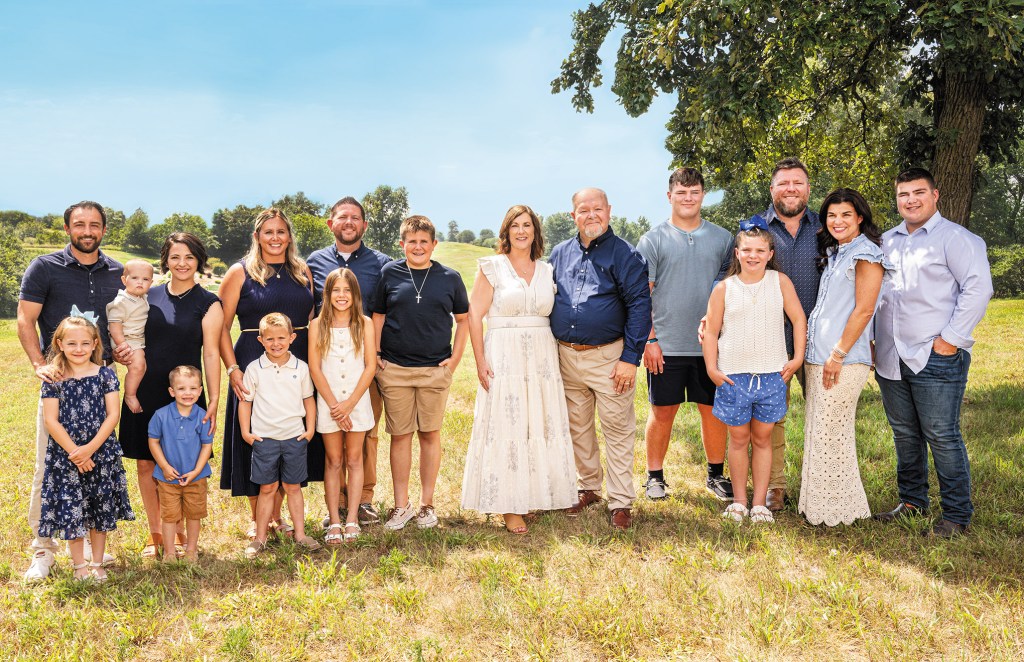
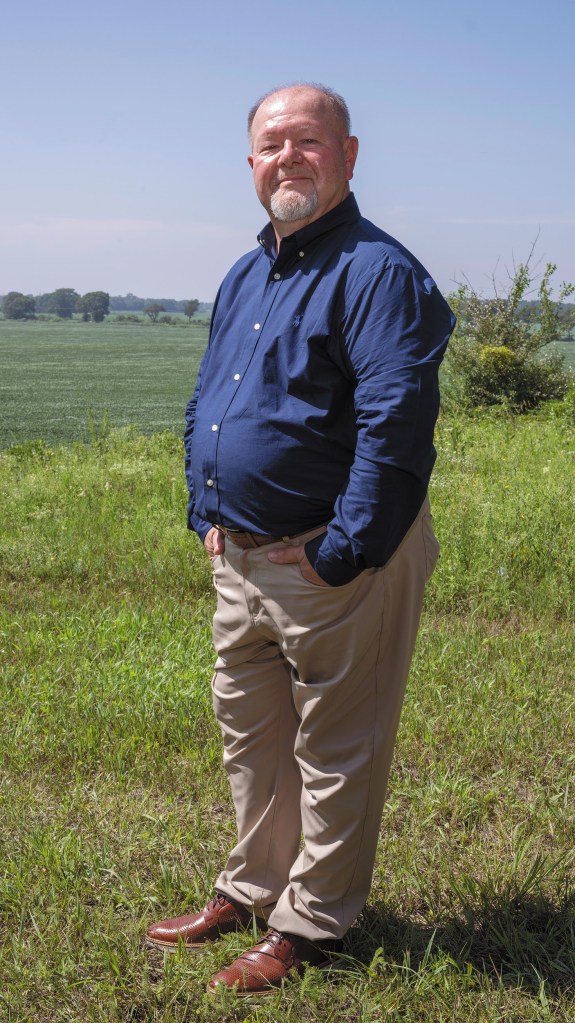
Greg Sandrock, partner at The Cornerstone Agency in Tampico, Illinois, was born into a farming community. His family’s farm grew corn and soybeans and raised hogs and cattle. But instead of following the same route, he took a part-time job as a crop adjuster. The experience opened his eyes to the insurance industry. Three years later, in 1988, he took the step of starting his own agency.
“It was me, my wife and one of our children in a playpen in a very small, rented office,” Sandrock says. “Our clients and local community were good to us, and the agency grew organically from there.”
Today, The Cornerstone Agency has five locations and 24 full-time employees. They focus on property & casualty in farm and crop, with some personal lines and commercial lines. He is joined at the agency by his two sons, his son-in-law, and another senior partner, Todd Mickley.
Prior to his installation as Big “I” chair at the Big “I” Fall Leadership Conference, to take place Sept. 30-Oct. 3 at the Hilton Baltimore Inner Harbor in Baltimore, Independent Agent magazine talked with Sandrock about the impact of Big “I” involvement, building on an already thriving young agent community, and the challenges and opportunities for independent agents when embracing technology.
How did you first get involved with the Big “I”?
I became a member right after I opened the agency. A few years in, I was approached by someone on the board of Big I Illinois and asked if I would consider serving as a regional director. That was my first step into leadership. From there, I served on a few committees, became secretary-treasurer, joined the state executive committee, moved through the chairs and eventually served as national director. That committee and regional involvement are what put me on the path to joining the national Executive Committee.
How has your involvement with the Big “I” shaped your career?
The more I learned about the Big “I,” the more I wanted to know. I began to understand the value that the national and state associations bring. There is so much available that it can be hard to wrap your head around it all, but I wanted to understand which tools and resources were available so I could know which fit my agency and which did not.
How does volunteering at the Big “I” impact your agency?
I spend a lot of time explaining to clients what I do through the association and why it matters. When I tell them about advocacy work, including visits to Capitol Hill, they understand that much of it ultimately helps consumers. Many clients are proud that we are involved in that work.
It has also helped our agency mature. Because of my involvement, our team has a better understanding of how the state and national associations fit together, how advocacy works at both levels and how relationships, technology and other Big “I” resources can benefit agencies in Illinois.
What are your priorities as Big “I” chair?
Young agents are a major priority for me because they are our future. They are the building blocks and the foundation of the association’s long-term success. I want young agents to have real responsibility and a voice, especially around technology, social media and career awareness. We need to hear their ideas.
I also want to help state associations build stronger platforms for young agents. The Big “I” national association can support states as they develop better ways to bring young agents in and show them the value of involvement.
Appealing to a larger audience?
We need to make sure we communicate value to different types of agencies. Large agencies, Main Street agencies and small startups or one- and two-person shops all need to be presented with different value propositions for membership. We need to understand how each group wants value delivered, whether in person, virtually or through new tools like artificial intelligence (AI).
What are your interests outside of insurance?
My wife and I have three grown children. They are all married and live in our general area. We also have nine grandchildren—each of our children and their spouses has three children.
One of my sideline interests is a golf course our family built after purchasing land with some extended family. It is a semi-private, 18-hole golf course with an additional nine-hole par-3 course and a driving range. Once you own a golf course, you almost have to give up the game because you are too busy with everything else, but it has become something our family shares. The course has been open for 25 years.
More from the September Issue



What are the biggest challenges for the independent agency channel?
Our biggest challenges also give us our biggest opportunities. When you look at AI, technology can make it easier to do business, but the human element does not go away. Our value is still in being consultants, whether we are meeting clients virtually, one-on-one or with AI as part of the communication process.
Market access is another challenge. Carrier partners are phenomenal, but they are also working through what AI and automation mean for them. On the agency side, it can be difficult when underwriting, marketing or claims processes become so automated that there are fewer people to talk to.
Crop insurance market?
The crop insurance industry is very niche-driven, but the scale of opportunity and risk has changed significantly. As that continues to evolve, there is more interest in products and add-on products in the marketplace.
Technology and AI are helping model storm patterns and weather patterns, which is intriguing. At the same time, the market continues to grow and become more complex. Farms are not what they used to be. Agriculture has been a leader in some areas of technology, including satellite-driven tools and autonomous equipment.
The public-private partnership in federal crop insurance continues to evolve. And the pandemic reinforced the importance of a safe domestic food supply and the financial support needed to ensure farmers can continue farming, regardless of commodity prices.
What are the biggest opportunities for the independent agency channel?
There is a ton of opportunity in building relationships with clients who feel like they have become numbers. Some companies have brought that personal touch back with a friendly greeting and better service. I think we have the same opportunity in insurance. Independent agencies can stand out by leveraging technology to improve efficiency while still delivering human contact and personal value.
How should agencies approach implementing technology?
The biggest thing is finding a vendor that lines up with the size of your agency and what it wants to accomplish. There is no point in buying a bus if you are only hauling two people, but if you have a family of eight, you need something bigger. Technology decisions should line up with budget, operations and future growth.
Agencies can either overspend on technology they do not need or underspend in an area where a better system would help. It starts with the management system. From there, agencies can begin to understand the system’s capabilities and challenge vendors to demonstrate which AI-related tools are already available before spending money on something that may not fit.
What advice would you give to new agents entering the industry today?
Start with your Big “I” state association. There are so many resources available in the states to help startups and young agents. It also gives you credibility because you belong to a professional organization with standards, ethics and education. Education is a requirement, but a successful young agent should want to learn more about the industry and its products.
If you are starting out, talk with the principals or owners about what you want your future to look like. Maybe you are in personal lines but want to move into commercial. Have that conversation. Set one-year, three-year and five-year goals, communicate them, review them honestly and adjust when needed.
How can the insurance industry attract younger talent?
Agencies need to have open conversations with young people about what they want their future to look like and what opportunities exist in this career path. That can include people already in the industry, people in other fields or students coming out of high school, community college or university.
Programs like InvestSM are great resources because they help people see the possibilities in insurance earlier. We are not always good at selling our industry, but many different paths can lead someone into an agency or into a young agent role.
How can agencies retain their best young people?
Flexibility is key. I do not want to hire someone just to fill a spot today. I want to understand their aspirations, goals and what they want to accomplish. That means being open to their personal and family needs, including flexible schedules when the work can still get done. You need to be sensitive to what younger talent needs and not box them into one rigid window. Have the conversation and figure out what works for them and for the agency.
Best part about being an independent agent?
One word: independence. At the end of the day, we are working for our clients. We are there to be a resource, help them manage risk and match them with the carrier that can provide the coverage they need at an efficient price point.
From a personal standpoint, the best part is being able to flex my schedule around my family, hobbies and passions. Once you understand that freedom, it is hard to imagine another industry that allows you to do the same thing.
Will Jones is IA editor-in-chief.
Agency Management Solutions
This month’s issue

The October issue is out now!