How Digital Evidence Is Changing Commercial Auto Accident Reconstruction
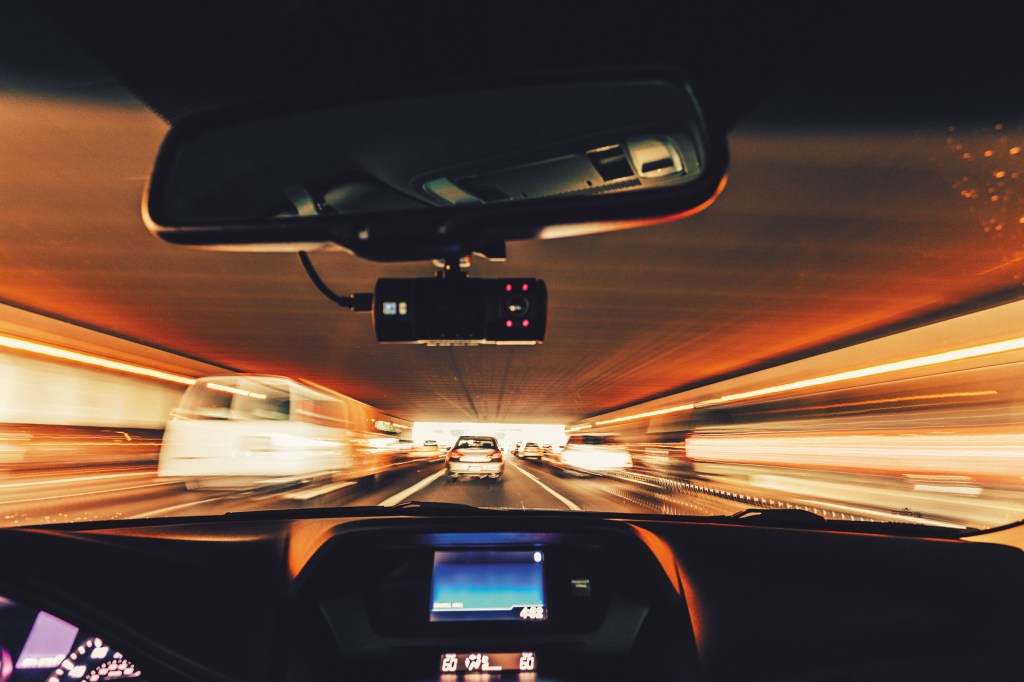
Technologies like telematics, driver dashcams, forward-facing cameras and advanced driver assistance systems (ADAS) are increasingly incorporated into the risk mitigation plans of commercial auto fleets. But how do those tools come into play when a claim occurs?
Digital evidence makes it possible to determine crash details with more certainty, says Seth Behrens, director of engineering at Knott Laboratory. But it’s important to be clear on what data can and cannot communicate in the aftermath of a crash.
“The digital ecosystem is expanding year by year, and the newer the vehicle is, the more information is going to be out there,” Behrens says. “What our job is as reconstructionists and investigators is to take all these sources of data and reconcile them.”
More from The October Issue



“Video is a great thing we’re seeing on most commercial fleets nowadays,” Behrens says. “A lot of times we will get driver-facing views and forward-facing views and we can reconstruct where a vehicle was and what a driver was doing.”
However, a common challenge with video is lens distortion, which makes footage seem like it was shot through a fishbowl. Video can prove the sequence of events, the color of the traffic light or where a driver’s eyes were looking, but it can also exaggerate important details, such as a driver’s hand motions, vehicle speed or location.
“A big focus of what we do with video evidence is determining if it’s a fair and representative view of what a driver could see,” Behrens says. “If we can reconcile video with other sources of electronic data and physical evidence, it makes it even stronger.”
Modern vehicles will have some type of event data recorder (EDR), Behrens says, noting that the Fixing America’s Surface Transportation (FAST) Act requires passenger vehicles to store at least five seconds of information if they’re involved in a crash. Eventually, a new rule from the National Highway Traffic Safety Administration (NHTSA) will require passenger vehicles to store at least 20 seconds of information. While the requirement does not apply to heavy trucks, they will still likely have an EDR.
“How fast was the vehicle going? Was it slowing or accelerating? How severe was the impact? All those things we’re going to get from electronic data recorders,” he says. “Newer vehicles will even have [ADAS] that will tell us whether a vehicle was in its lane or how far ahead other vehicles were.”
More on Commercial Auto

Modern crash reconstruction also involves 3D laser scanners to document crash scenes and vehicle crush damage, aerial drones to take photographs and measurements from the air, and software to determine how fast objects were moving through videos.
“As reconstructionists, our job is to put puzzle pieces together to determine what happened in an event,” Behrens says. “We then relay that information to insurance agents, attorneys and, ultimately, sometimes we have to teach what we found to a jury. Our job is, ‘Here’s the facts and the math, science and technology we used.’”
Behrens stresses the urgency of preserving data after a crash, which leads to a better outcome for everyone involved. “If you’ve got a crash, be aware of all the potential data that’s out there and gather it, because it’s not going to last forever,” he says. “It’s frustrating if a vehicle has been scrapped or sold at auction and nobody downloaded the data. And heavy vehicles will actually overwrite themselves, so if you drive them around for a while afterward, information can be lost.”
“The work on the front end of gathering that information can reduce costs and get clear answers upfront so you can know how to handle a claim or lawsuit,” he says.
AnneMarie McPherson Spears is IA news editor.
Agency Management Solutions
Insurance Markets
This month’s issue

The September issue is out now!