Totaled Condo Building: What Happens If HOA Doesn’t Rebuild?
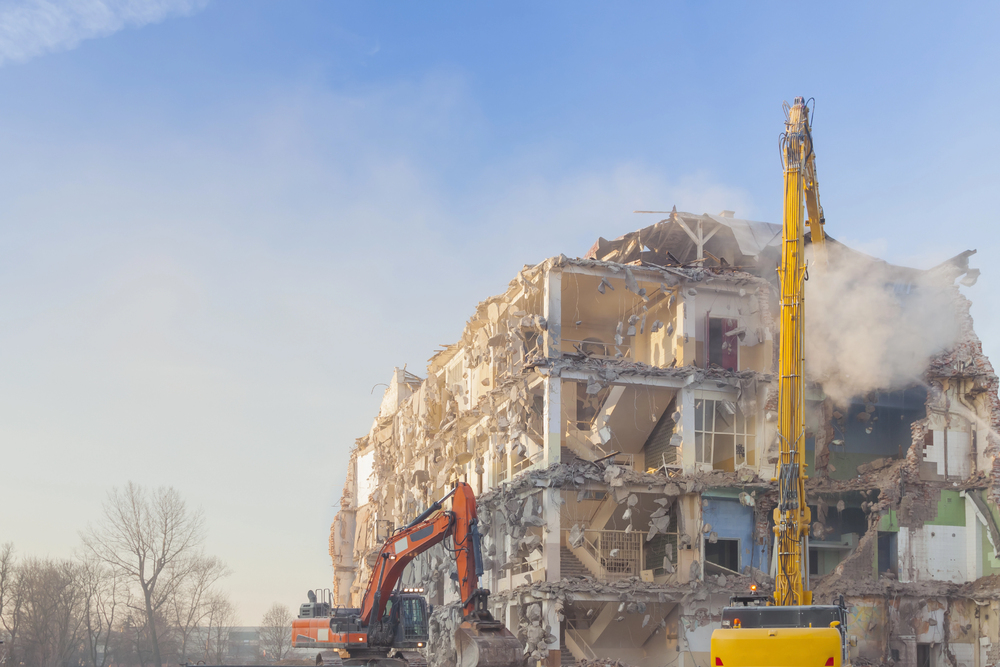
A building that is owned by a condo or homeowner association is totaled in a covered loss and the association is not going to rebuild.
Q: How does the unit owner recoup their investment? Does the association pay the market value of the unit to each unit owner? For example, what if the purchase price for the condo was $300,000, but the owner carries an HO-6 that is less than the $300,000 value?
Response 1: There isn’t a single clean answer here. This scenario sits at the intersection of coverage interpretation and legal ownership. It’s a mistake to try to solve it from an insurance perspective alone.

What Are Your Goals for 2027?
Market value is largely irrelevant. Property policies don’t pay based on what the unit would sell for. Loss settlement is driven by defined valuation methods like actual cash value (ACV), replacement cost value (RCV) or functional replacement cost (FRC), not the unit owner’s investment.
The HO6 form may influence things but doesn’t play a huge role. A close look at the association’s policy will tell us more. Is it written to pay ACV, RCV, FRC or something else? Even if RC or FRC is shown, if the association elects not to rebuild, recovery is typically limited to the ACV portion because replacement cost benefits are contingent on repair or replacement.
The association declaration and bylaws will dictate how insurance proceeds are allocated among unit owners. There is no standard approach, and it can vary significantly. State law may also come into play. In some jurisdictions, statutes can impact how ownership interests and proceeds are handled after a total loss.
The bottom line is this is not a question an insurance professional can, or should, answer. We can provide information on the policies that we control. Ultimately, this is legal territory and the entire picture needs to be reviewed by an attorney.
Response 2: First of all, don’t pay any attention to unit owners’ asserted market values—they have nothing to do with the scenario you describe.
The way this is handled will largely depend on state law and the condominium documents. It’s likely that insurance proceeds will be paid into a trust. From the funds in the trust, if not prohibited by law or condominium provision, individual owners may be entitled to collect a share equal to their beneficial interest in the common areas of the building.
What Do the Experts Think?



In certain states, interests are determined by the percentage each unit represents of the building measured in square feet, without regard to location in the building or any build-out differences. No payment can be made to an owner unless any mortgage holder has been indemnified. And, of course, unit owners must depend on their own property insurance for any collection for interior walls, contents and other owner sole responsibilities. Only if some party is held officially responsible for the proximate cause of the insured peril can they hope to collect from a third party.
Response 3: Two settlements are involved. The unit owner collects from the HO-6 for everything that it covers—personal property, additional living expense and the items that are considered to be owned by the unit owner, such as a wet bar, built-in entertainment center and other stuff that’s defined by the condo documents as being the unit owner’s responsibility.
The condo association recovers the value of its stuff—such as the building and maintenance equipment—from its insurance policy.
If the property is not replaced, the payout from the insurance company is distributed to the owners according to the formula spelled out in the condo document.
A specific answer to both settlement questions requires a careful reading of the documents. The amount received by the unit owner might be more or less than the amount paid for the unit.
This question was originally submitted by an agent through the Big “I” Virtual University’s (VU) Ask an Expert service, with responses curated from multiple VU faculty members. Answers to other coverage questions are available on the VU website. If you need help accessing the website, request login information.
This article is intended for general informational purposes only, and any opinions expressed are solely those of the author(s). The article is provided “as is” with no warranties or representations of any kind, and any liability is disclaimed that is in any way connected to reliance on or use of the information contained therein. The article is not intended to constitute and should not be considered legal or other professional advice, nor shall it serve as a substitute for obtaining such advice. If specific expert advice is required or desired, the services of an appropriate, competent professional, such as an attorney or accountant, should be sought.
Agency Management Solutions
Insurance Markets
Big I Programs
This month’s issue

The October issue is out now!