What Compensation Administration Means to the Agent-Carrier Relationship

By Jake Gilbert
Compensation is more than an accounting exercise. It’s a measure of trust. Independent agencies shouldn’t have to wonder whether they’re being paid correctly or, worse, spend valuable time proving that they weren’t.
But as compensation structures become increasingly sophisticated, many agents find themselves doing exactly that. They’re comparing commission statements against carrier reports, tracking policy activity, checking renewals and trying to understand why a payment changed. Even when everything is accurate, verifying commissions takes time away from serving clients and writing new business.
Independent agents operate in an increasingly complex environment, but complexity itself isn’t the problem. The challenge is making that complexity understandable and accessible to all stakeholders in the insurance lifecycle.

Big “I” Fall Leadership Conference
Sept. 30 – Oct. 3
When agents can clearly see how a payment was calculated, confidence grows. When compensation is difficult to follow or changes without clear communication, questions naturally extend beyond the payment itself. And trust in the broader carrier relationship can begin to erode.
Recent industry headlines around compensation have reminded every independent agency how quickly business conditions can change. Agents are paying close attention not only to how they’re being compensated today but also to how readily they might need to adapt their business to future changes. In this environment, transparency and consistency become competitive advantages.
Carriers have long recognized compensation as a strategic tool for driving growth, encouraging desired behaviors and strengthening agency relationships. However, strategic compensation programs are only as effective as a carrier’s ability to administer them effectively and transparently.
For the independent agent channel, this integration is important because compensation is not an isolated component of the agent’s experience. Every step from onboarding, compliance and day-to-day maintenance up to and including compensation are all pieces of a larger distribution management framework.
More on Agency Accounting


The strongest carrier relationships are often built through hundreds of everyday interactions that remove friction rather than create it. That includes clear commission statements, reliable payments and fewer administrative questions. These factors contribute to greater certainty that the systems supporting the relationship are working as expected.
Expertise, service and relationships have always defined the independent channel, and agents should have as much confidence in carrier systems as they do in the people behind them. Strong relationships deserve solid operational foundations.
As distribution continues to evolve, carriers that invest in making compensation easier to understand and easier to trust will do more than improve administrative efficiency. They’ll give agents more time to focus on what matters most: serving clients, growing their businesses and strengthening the partnerships that drive long-term success.
Jake Gilbert is senior vice president and general manager of distribution, compensation and compliance solutions at Vertafore. During his 13 years with the company, he has held leadership roles across finance, customer operations, and business operations. He works closely with distribution leaders to help simplify complexity and strengthen the experiences that support independent agents and agencies.
Categories
Agency Management Solutions
This month’s issue
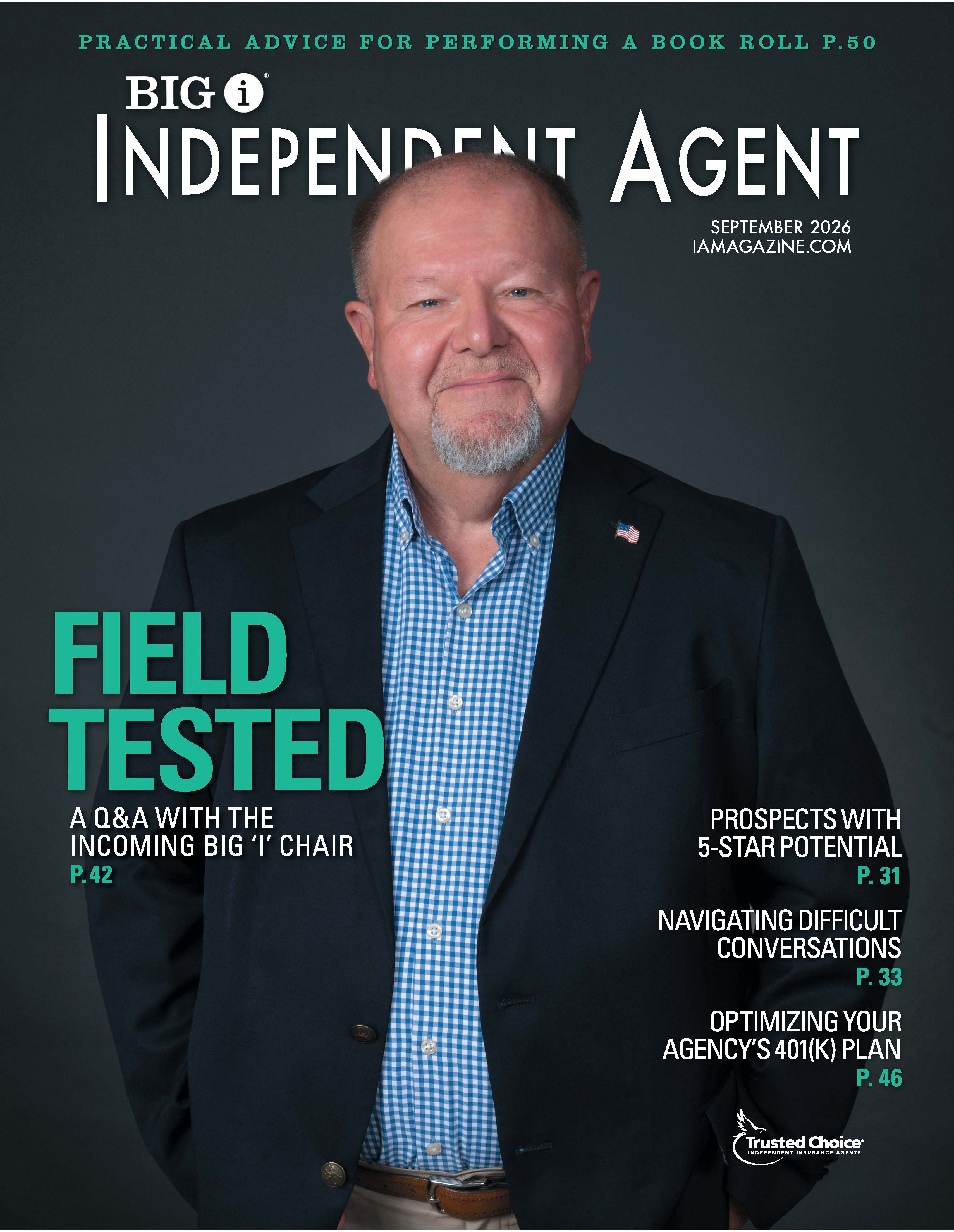
The September issue is out now!