5 Issues Independent Agents Will Address at the 2026 Big ‘I’ Legislative Conference
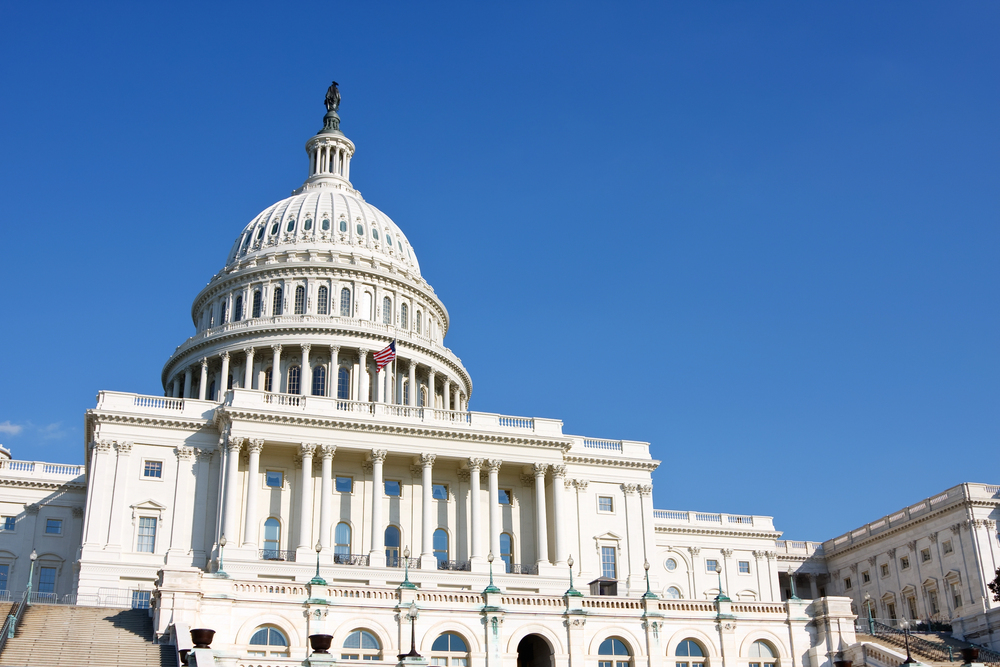
The 2026 Big “I” Legislative Conference will take place April 22–24 at The Westin Washington, D.C. Downtown Hotel. During the conference, independent insurance agents and brokers from across the country will share their perspectives with legislators on issues important to the independent agency system.
This year’s conference will focus on timely issues that could affect every agency’s bottom line, making your participation crucial.
Here are five issues that will be a focus at this year’s conference:
1) Protect Our Courts by Cracking Down on Lawsuit Abuse
Abuse of the legal system is a significant problem and adds considerable costs to the insurance industry, which are then passed along in the premiums that consumers pay.
An especially troubling trend is the unchecked manner in which foreign entities and governments finance and subsidize litigation in American courts. In most jurisdictions, defendants are required to disclose insurance agreements in litigation but litigation funding agreements are not subject to such disclosure. Lawmakers can protect plaintiffs by passing legislation to make sure they are aware when attorneys have committed to share their recovery with a third-party funder.
In many cases, third-party litigation funders (TPLF) pay a more favorable tax rate on their share of a court award when compared to the actual injured plaintiff. The profits of domestic funders currently get treated as capital gains for tax purposes. At the same time, foreign investors operating through shell companies pay no U.S. taxes on their litigation profits since they are not subject to capital gains. This perversely incentivizes foreign and domestic investment in more U.S. litigation.
The Big “I” supports the “Tackling Predatory Litigation Funding Act,” which would treat third-party lawsuit proceeds as ordinary income and require disclosure of outside financial interests. Another important bill, the “Protecting Our Courts from Foreign Manipulation Act” would protect U.S. interests from foreign interference. Specifically, the bill would ban foreign governments and sovereign wealth funds from engaging in TPLF and increase oversight of foreign involvement.
In the current system, foreign countries, sovereign wealth funds and bad actors can exploit the secrecy currently surrounding third-party funding to weaponize the court system and extract intellectual property from U.S. companies and evade sanctions.
2) Address the Insurance Market Crisis by Encouraging Disaster Preparedness
Catastrophic natural disasters are increasing in severity at an alarming rate and efforts to mitigate risks and reduce exposure to these events are not keeping pace. Risk mitigation and proper land management make homes more resilient, protect families from natural disasters and reduce the post-event costs that taxpayers would otherwise bear.
In response, state governments are increasingly establishing mitigation grant programs that enable homeowners to prepare in advance for earthquakes, windstorms and wildfires. However, these grants are currently subject to federal taxation.
Bipartisan legislation, such as the “Disaster Mitigation and Tax Parity Act” and the “Disaster Resiliency and Coverage Act,” would eliminate federal taxation of these state grants and encourage the implementation of much-needed mitigation measures.
The Big “I” also supports the “Fix Our Forests Act,” which has already passed the U.S. House of Representatives with strong bipartisan support. Among other things, the bill would simplify and expedite environmental reviews so that forest management projects can be implemented quickly and end frivolous litigation that delays projects from being implemented. The Big “I” encourages the U.S. Senate to introduce and pass this important legislation so it can be signed into law.
3) Modernize and reauthorize the National Flood Insurance Program (NFIP)
The NFIP plays a critical role in mitigating risk by providing flood insurance to homeowners and businesses in high-risk areas. The Big “I” strongly supports a long-term reauthorization of a modernized program that would increase take-up rates, both in the NFIP and in the private market.
Since the conclusion of fiscal year 2017, the NFIP has been reauthorized on a short-term basis 35 times. During the government shutdown late last year, the NFIP lapsed for 43 days, leaving customers vulnerable near the peak of hurricane season. To provide certainty, the Big “I” encourages Congress to pass a long-term reauthorization of the program before its expiration on Sept. 30.
The Big “I” also supports modernizing the NFIP through legislation, such as the “Continuous Coverage for Flood Insurance Act,” which specifies that private flood insurance can satisfy NFIP continuous coverage requirements. While modernizing the program, Congress must not harm the Write-Your-Own (WYO) Program, including WYO reimbursement reductions, and must not undermine the valuable and trusted role that independent agents play in the offering, selling and servicing of flood insurance.
4) Secure The National Economy and Insurance Marketplace from the Threat of Terrorism
The threat of unprovoked, unpredictable and possibly devastating attacks continues to loom large and creates complex and unique challenges for insurance providers. This risk is only higher amid the Iran war. The Terrorism Risk Insurance Program (TRIP) has been instrumental in preserving a stable, functioning terrorism insurance market. The Big “I” is actively lobbying Congress to ensure the program is reauthorized well before its scheduled expiration at the end of 2027.
As the U.S. prepares for major upcoming events in 2026, including the nation’s 250th anniversary and the FIFA World Cup hosted across North America, high-profile venues will attract even greater attention from terrorists. These events highlight elevated risk across multiple sectors of the economy, giving every member of Congress a reason to reauthorize TRIP as soon as possible.
5) Advance Reforms to Lower Health Insurance Costs and Increase Transparency
A central pillar of this effort is preserving the long-standing tax exclusion for employer-provided health insurance. Employer-sponsored coverage remains the single largest source of health insurance in the U.S., covering more Americans than any other coverage option combined. The tax exclusion enables broad risk pooling, stabilizes premiums, and supports consistent access to care for working families.
At the same time, greater health care price and billing transparency is essential. The “Patients Deserve Price Tags Act” enforces existing transparency rules and expands them, requires the disclosure of actual prices, and directs insurers to provide patients with easy-to-understand bills. Patients and payers need access to clear, standardized dollar amounts—not vague estimates—to make informed decisions.
Registration for the 2026 Big “I” Legislative Conference is now open. Register now and bring the voice of independent agents directly to lawmakers. Conference attendees will visit approximately 400 congressional offices to advocate for the independent agency system and the consumers they serve.
Nathan Riedel is Big “I” senior vice president of federal government affairs.
News Types
Agency Management Solutions
Insurance Markets
Big I Programs
This month’s issue

The March issue is out now!