Full-Contact Leadership
By: Wally Adamchik
There is a lot of talk today about a leadership crisis in America. No agency is immune to this crisis, and some are even more susceptible to it than others. Real leaders today are few and far between. We have great technicians and great managers, but few great leaders.
To truly succeed as a leader today, you cannot simply go through the motions. We must charge ahead at full speed. In this hyper-competitive world, it’s not enough just to show up and look good. Leadership is a full-contact, sometimes risky position with no hazardous duty pay.
The term “full contact” generally brings to mind the image of physical contact. But it presents itself in other ways as well.
First, as leaders, we must be fully in contact with ourselves. This does not always come naturally for many people. It’s far easier to be out of touch with our thoughts, moods and biases.
As leaders, we must also be in full contact with our own purpose. Our purpose is our vision of the future, our values and mission. The importance of purpose cannot be overstated. Our role as leaders is to change the status quo. We must always keep one eye positioned on the future that we want to create. And we must have a fundamental sense of the actions needed to arrive at that future and achieve that vision.
Next, leaders must be in full contact with others in their agencies. This includes peers, subordinates and senior management. Leadership is about change, but it is also about behaviors. Leadership involves a great deal of soft skills and interaction with people. These interactions cannot be casual if the leader wants respect and to make an impact.
The leader must be in full contact with the values of the organization. Ultimately, the rest of an organization will live up to—or down to—the level set by the leader. In the absence of corporate values, that level is open for discussion and can vary. With firm corporate values, your agency’s people have sound principles that guide their behaviors. Enron had values written on paper, but the organization’s leadership lost contact with those values.
Today, it is also essential to be in full contact with customers. They are demanding and have high expectations. Ultimately, they pay our salary. Yet, far too often, businesses operate in a vacuum and are blind to the customers’ needs. This data is borne out in many image surveys that indicate businesses are, in a word, unresponsive. The leader who is in full contact with his or her customers actively seeks them out and engages them in conversation—real talk about more than just the product or service at hand.
Full-contact leaders must merge all these contact points into a single, unified effort. They set direction, articulate the vision and know just where they want to bring the organization. They can visualize it in their mind, smell it, taste it, feel it. They are able to balance multiple perspectives because of their grounded perspective.
Finally, full-contact leaders are aware that being in a leadership position involves some risk. Like athletes engaged in full-contact sports, these leaders know they may take some hits (and give some out, too), but they don’t shy away from the impact. They recognize it as an integral part of a full-contact position.
Wally Adamchik (wally@beafirestarter.com) is president of FireStarter Speaking and Consulting.
This month’s issue
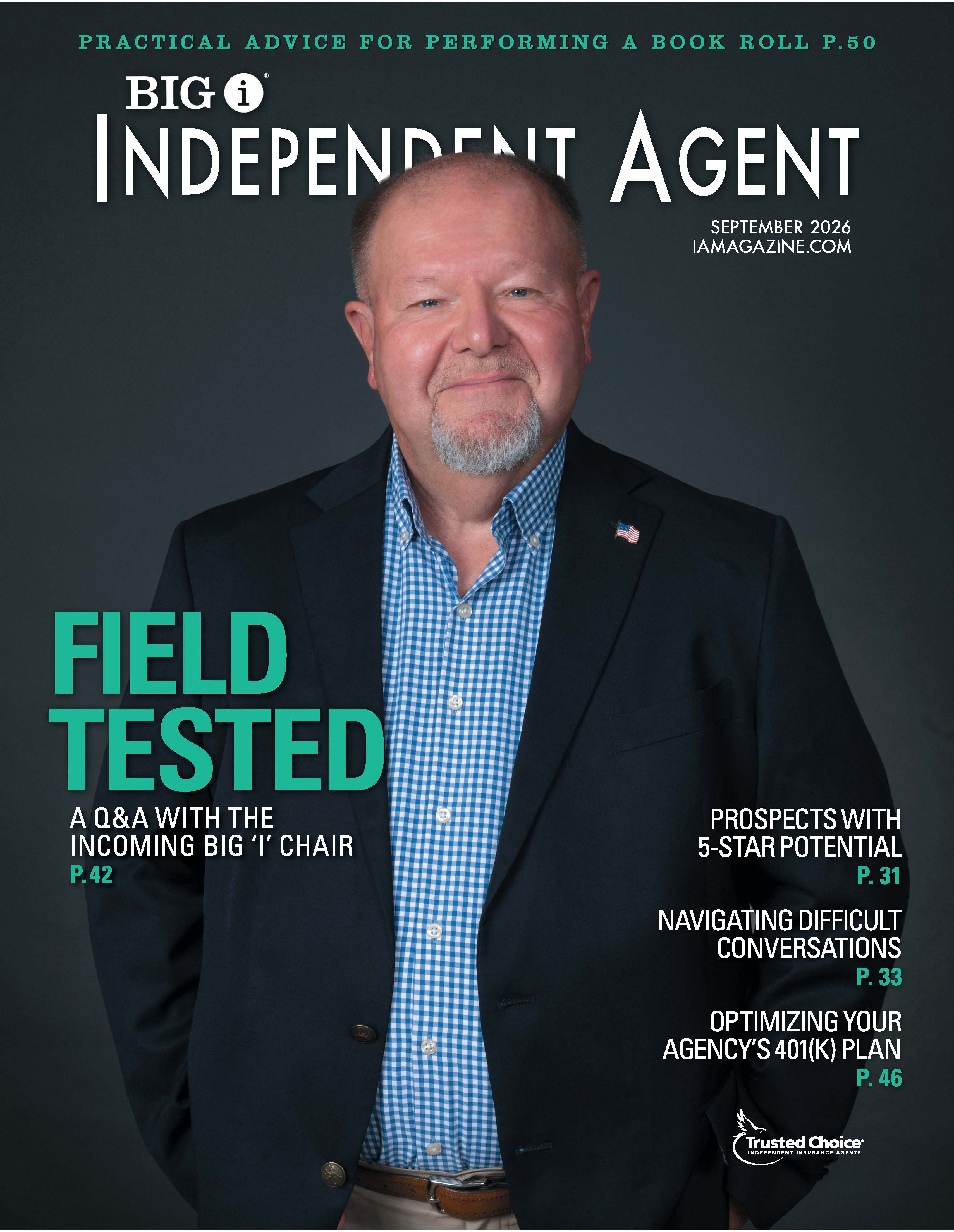
The September issue is out now!