Deep Fakes: The New Front Line in Insurance Fraud
By Shawn Moynihan
The property & casualty insurance industry has always evolved alongside risk. From climate-driven catastrophes to cyber liability, insurers have learned to adapt as new threats emerge. Today, another steadily accelerating challenge has the potential to reshape the fraud landscape: deepfakes.
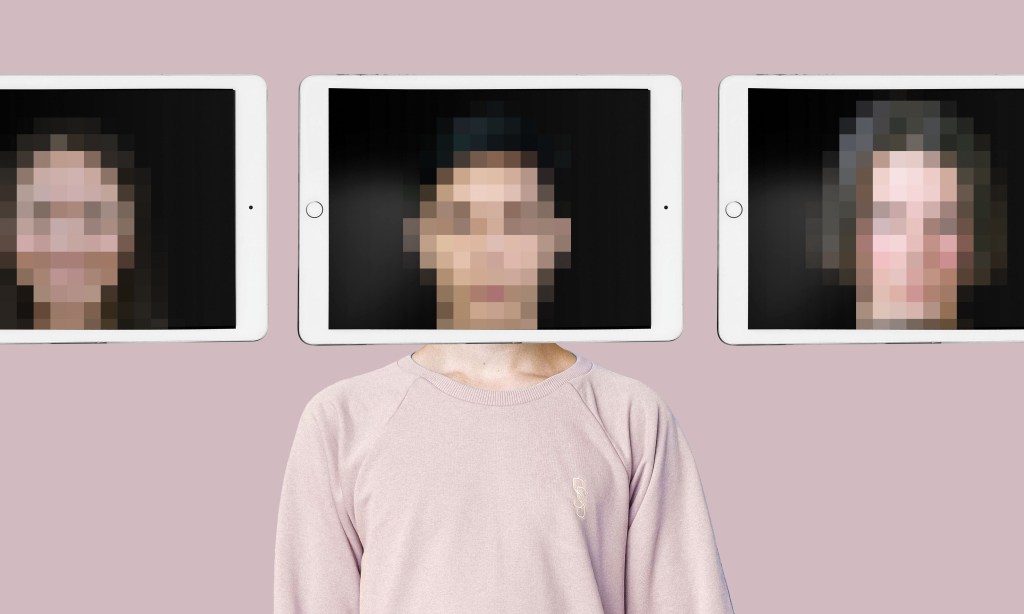
Once a novelty confined to research labs and online curiosities, deepfake technology has matured into a powerful, widely accessible tool. Artificial intelligence (AI) can now generate hyper-realistic images, videos and audio files that convincingly mimic real people, places and events.
For insurers that rely heavily on digital evidence to assess claims, this represents a fundamental shift in the way truth is established when determining liability.
Historically, insurance fraud required a certain degree of sophistication. Fabricating evidence meant staging physical scenes, manipulating photographs with professional tools, or coordinating complex schemes that left traces.
Today, a claimant armed with a smartphone and consumer-grade AI software can generate “proof” of property damage, vehicle collisions or personal injury in minutes. Photos can show water damage that never occurred, videos can depict staged accidents and audio clips can be used to impersonate contractors or witnesses.
“We’re seeing the greatest opportunity for deepfake-driven fraud within personal property claims, such as homeowners, renters and mobile home claims,” says Doug Townsend, director and product owner for Digital Media Forensics, Verisk Claims. “Unlike auto claims, these losses usually involve a single party with no witnesses, which reduces natural friction that might otherwise expose inconsistencies.”
More From the May Issue


Insureds can report a legitimate claim for a water loss in their home but then use deepfake imagery to inflate their damages. “Taking pictures of high-priced luxury clothing, they use generative AI to manipulate the photos to make the items appear water- or mold-damaged,” Townsend says. “Sometimes they even go so far as to create fake receipts to prove the ownership of these luxury items.”
Insurers are responding by deploying advanced forensic tools that analyze pixel-level data, biometric markers and behavioral patterns invisible to the human eye. Techniques such as cryptographic verification, content provenance tracking and invisible watermarking are gaining traction.
When fabricated evidence looks indistinguishable from the real thing, traditional review processes strain under the weight of uncertainty. Here are some characteristics that indicate a deepfake:
Text and symbols. Letters, numbers and labels that may appear nonsensical or distorted.
Lighting and shadows. Inconsistencies in shadows or the general direction of light in photos.
Artistic texture. Some deepfakes still exhibit a smooth or stylized sheen; this is commonly associated with deepfake images.
Color uniformity. Perfectly even colors, especially pure blacks or whites, can indicate synthetic generation.
Distortions. Curves, limbs and other structural elements within a photo may appear unnaturally distorted, particularly in the background of the image.
Video motion. Unnatural motion in video is a telltale sign of deepfaking. Unfortunately, still images don’t benefit in the same way.
Maintaining confidence in digital evidence will require more than new tools. It will demand updated workflows, ongoing employee training, clear governance around AI usage and industrywide cooperation.

Shape the Big “I” Agents Council for Technology 2027 Tech Trends report
“Given the growing public use of generative AI, the scale of innovation and investment that are improving these models and making them more accessible, and the increasing reliance on automation and digital interaction in insurance, we expect this trend to increase over the coming years,” Townsend says. “This is something we’re watching very closely.”
Independent agents can complement insurers’ tools, especially when the claim involves sizable commercial and personal lines property losses. Agents’ interests are aligned with the carriers in assisting with fraud detection by interacting with the insured or contractors to verify that the damage occurred and that the repair work matches what the claim purports.
In the age of AI, the question for insurers is no longer whether digital deception will impact their business, but rather how quickly they are prepared to respond. As deepfakes grow more convincing, preserving trust may become one of the industry’s most valuable—and vulnerable—assets.
Shawn Moynihan is associate at Aartrijk.
Categories
Agency Management Solutions
Insurance Markets
This month’s issue
The October issue is out now!