More Local, More Mobile
By: Russ Banham
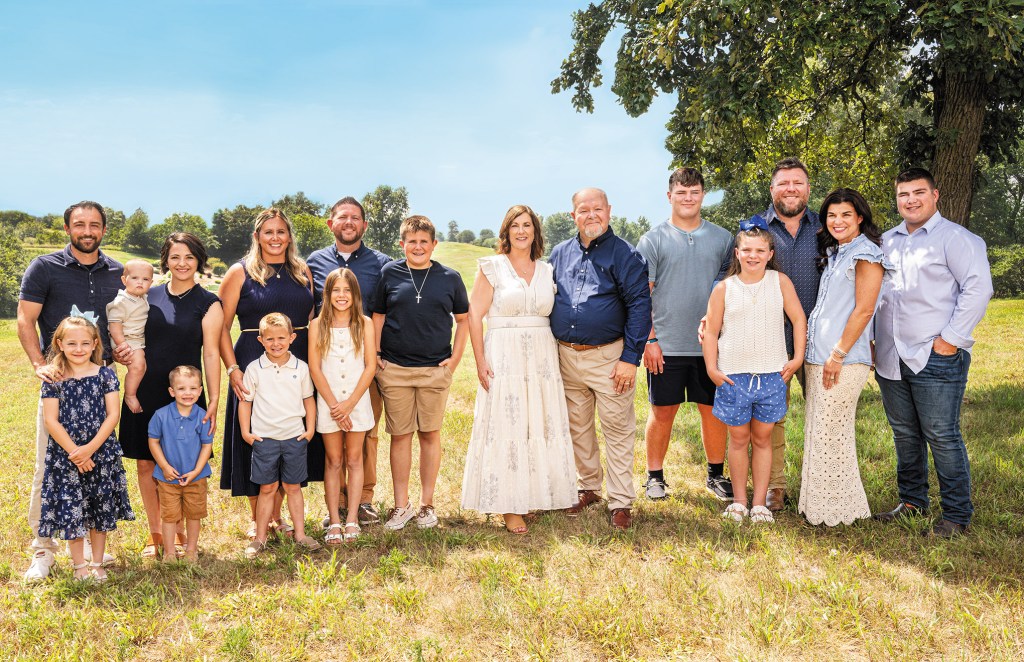
| Face-to-face—or Facetime? While customers are demanding both, independent agents are struggling to determine what that means for their physical location and agency model. Agents are trying to strike a delicate balance between personal interactions with current and prospective customers on the one hand, and the use of technology to create easier ways of conducting and transacting business on the other. Among those succeeding is Murray Group Insurance Services in Albany, N.Y. “We’re very much a family-owned agency, with my father-in-law owning the business, and my brother-in-law, my wife and her twin sister and me working here,” says Ryan Handley, the agency’s director of marketing. “While we believe very much in having a local presence and always prefer face-to-face personal interactions with customers, we also seek to create a great online experience for them, too.” Combining these two worlds is what works best for the agency, Handley asserts. “Our goal is to be the most well-known, respected agency within a 100-mile radius,” he says. “We’re not here necessarily to provide the cheapest quote. We’re here because we care about this community. I recently got an email from someone who said he saw on a neighbor’s Facebook page that he did business with us, and had a great Christmas party to boot. He’s now a customer. Technology really allows us to focus even more on our clients.” But what does this customer contact balancing act mean for agency structure? Agency Models Evolve Take, for instance, the model of a single agency with distributed offices bound together by technology. This structure is working quite well for John Pfeil, president and cofounder of ProStar Insurance Inc. Although the agency’s headquarters is in Kenmore, Wash., it has five additional locations in western Washington, where its producers can meet face-to-face in their hometowns with neighbors and passersby, discussing the insurance they need and claims they’ve filed. In some cases, the producer might have a small office; in others, he or she may rent a conference room in an office complex. Why does the location model work for Pfeil? “In the aftermath of the recession, people want to know they’re getting the best value for their money—they want accountability, which you can only get from someone you can see in the flesh,” he says. “We believe that technology assists the client experience, but it doesn’t replace it.” Pfeil points to the financial investment firm, Edward Jones (see sidebar) as an example of this focus on a local presence and customer relations. “Agencies could learn a lot from their model,” he says. “They put optimal people in optimal locations, while providing the systems and workflows they need to effectively and seamlessly conduct business. Sure, this may add more overhead and exposure from a balance sheet perspective, but we believe that a local presence more than makes up for the cost.” The More, the Better? It may explain the recent finding in the biennial Agency Universe Study by Future One indicating that the proportion of both large and small agencies with multiple locations has increased in the past two years. Does this mean all agencies are headed the same way? “Not at all,” says Steve Anderson, president of Anderson Network, a Franklin, Tenn.-based insurance agency consulting firm. “All the different models make sense and have legs. I’ve seen examples of successful agencies employing all sorts of business strategies, from a virtual agency in Kansas City that has no physical location, six employees and clients in 35 states, to local agencies in a storefront on Main Street USA, the way they’ve been for a century.” Many local agencies have invested in an online presence to lure people past the front door. “Such boutique agencies know that most people these days do their insurance research online,” Anderson explains. “Thus, they focus on online resources when appropriate and face-to-face or other types of personal interactions when needed. There’s a real interesting mix of different agency models going on right now, making this a very exciting time, indeed.” Rise of the Uber-Local In that mix is Byrnes Agency, located smack dab since its founding in 1932 in the middle of Dayville, Conn. “This is your traditional New England small hometown, with a church steeple punctuating the sky,” says Jay Byrnes, the agency’s president. “We’re the friendly guy on the street in your neighborhood, versus some disembodied, bureaucratic behemoth behind the curtain—not to malign these mega-organizations. Still, we’re trying to be innovative.” His younger customers prefer email and other virtual communications, as opposed to his older customer base that just likes to drop by and chat about the weather, he explains. “We’ve got an online presence and are doing e-signatures and other things like social media to appease the younger crowd,” Byrnes says. “But, we also emphasize our local presence. People like familiarity.” The agency has two smaller “spoke” offices in Danielson and Norwich connected by technology to the main “hub” office. A similar set-up is in place at SouthGroup Insurance (Gulf Coast) in Bay Saint Louis, Miss., part of the SouthGroup franchise of agencies. “We’ve structured the agency to be more accessible to clients by having three smaller offices distributed across our geographic area,” says Angelyn Treutel, the agency’s president. “Today’s consumer is demanding convenience, choice and advocacy. We offer choice in our products, and also in the ways that consumers communicate with us, whether it’s face-to-face at the office or their homes, or virtually via webcasts, Facebook, LinkedIn, Twitter and email. The client rules.” The agency’s three rural offices are connected using IP phones to create the appearance that it is all in one place, Treutel says. “Our agents work as an effective team, so that no matter where a customer may approach them, either on the website or one of our office locations, we can provide the service they deserve,” she adds. A Little Bit of Everything The focus on a local presence may seem like a throwback to a bygone era in the virtual world, but many agents say that’s not the case. “Agencies that become an integral resource in their local neighborhoods will thrive and differentiate themselves,” says Claudia McClain, president of McClain Insurance Services in Everett, Wash. “We are moving constantly toward investing our marketing and payroll dollars into growing organically, while serving the community.” McClain says her agency is still studying additional ways to become even “more local and more mobile,” a balance she says is challenging. As part of attempting this Solomon-like task, the agency is reaching for a local presence in neighboring communities composed of different ethnic and socioeconomic demographics. A similar balancing act can be found at JDIC Insurance Group in Centralia, Ill. “We’re all about electronic signatures, blogging, social media and Facebook ads, but that doesn’t mean we don’t see ourselves as a local agency,” says Jason Cass, owner and president. “There hasn’t been a single, written policy in my agency that wasn’t written eyeball-to-eyeball. That alone tells you something.” Paradiso Insurance is an extreme example of the more local, more mobile philosophy. “We’re the odd duck,” says Chris Paradiso, president of the Stafford Springs, Conn.-based agency. “I believe you need a storefront, and mine is in the middle of a triangle in town. Walk out the front door and six yards away is the only post office. Six yards the other way is the town bank, and across the street is the town hall. I’m in the center of everything.” A brick-and-mortar presence is vital in the small town (population 200) to generate business, but the agency also employs a handful of sales personnel who travel the state and communicate with the home office via an array of technology tools. “We meet maybe once a month; the rest of the time they’re drumming up business,” Paradiso says. “We use technology to the extreme here, doing a lot with social media. We’re also completely paperless, and even use ‘customer cams’ on our computer so that people who can’t make it down to the office can still see me—on their home PCs and Macs.” Finding the Balance Agents say the various means of generating business, servicing customers and building relationships are all vital and necessary for today’s consumers. As Treutel puts it, “Successful agents are meeting today’s demands by offering a combination of personalized service and mobility that consumers find appealing. Different consumers prefer different communication methods, and our agency offers what they need and want.” Her agency has the flexibility of operating in a manner that works best for its consumer base and geographic area. “Our success has been derived from our multiple locations and virtual accessibility,” she asserts. “Down the line, more agencies will be available to clients with 24/7 service via client portals on their websites, chat capabilities and a strong Internet presence. But, there is still much to say for sales and services from multiple locations.” Anderson agrees: “Really the challenge for all agencies is to think out-of-the-box with regard to what an agency is and should look like,” he says. “Technology makes it easier to be an agency with several small, one- and two-person offices, all interconnected and still offering local service. [But] the goal is always the same. You never want to lose touch with the customer.” Russ Banham is an IA senior contributing writer. | Edward Jones CEO: In-Person Is Paramount Jim Weddle has spent his entire career—the last 37 years—at the fast-growing investment advisory firm Edward Jones, where he has been a managing partner and CEO since 2006. IA asked Weddle about the firm’s focus on a local presence as a way to build business and better relations with customers. IA: How important it is for Edward Jones to have a local, personal relationship with customers? Weddle: Our business has been built since our inception 90 years ago on the value proposition of providing convenient access to our financial advisors and the personally delivered service they provide with the assistance of our branch office service associates. Our financial advisors initiate the client relationship by introducing themselves and offering a personal handshake—obviously face-to-face. While business with many well-established clients can be and is conducted over the phone or with the assistance of our online tools and access, it is the personal relationship between our financial advisors and our clients that carries the day. The consistently high ratings our clients give us support our belief that the personal relationship is critically important. IA: Is there a problem with too much focus on technology versus customer interactions? Weddle: Today’s clientele has access to much more technology than ever before. Many are demanding electronic access to their account information with us, as well as our research and strategy guidance, and the functionality that can help track their progress toward their financial goals. That said, the world of finance and investing is getting more complicated and confusing. IA: So you believe there is a market for the personal relationship your financial advisors provide, one that is combined with state-of-the-art technology? This appears to be what many independent agencies are seeking. Weddle: Our strategy is to support and supplement the personal relationship with cutting edge technology, but to never try to replace the relationship with technology. That has been our mantra all along. —R.B. |
This month’s issue

The October issue is out now!