Tough Transitions
By: Susan Hodges
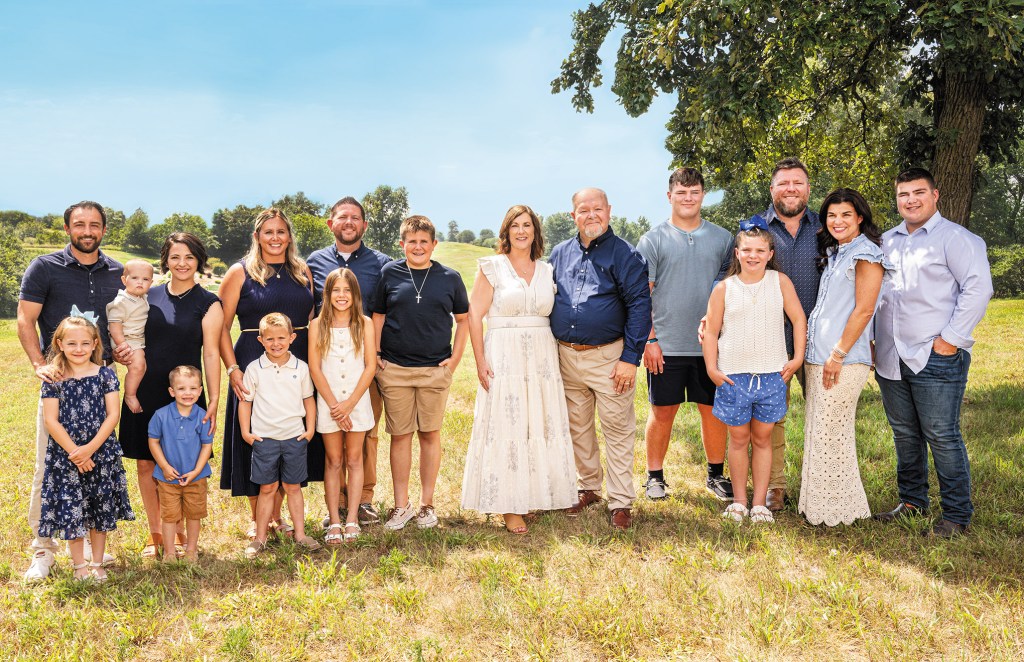
| Denise Johnson spent years building a book of business at her father’s agency. Then her dad decided to retire and her younger brother Scott joined the firm—and promptly was named president. Any other adult child of an agency owner might have been resentful, but not Denise. “Scott was at the point in his career that he had growing children he never saw,” says Denise, who is vice president. “He made a decision to put his family first, and Dad wanted him in here. Besides, Scott came in with a completely different background and perspective, so there was no problem at all.” Consider New Ideas Business at the nine-employee ECI Agency, Inc., of Piedmont, Okla., is exploding, thanks to brother-and-sister teamwork. “Scott has cool ideas and our [website]is one of them,” Denise explains. “On a Thursday afternoon, we set it up so that in moments, people could get life insurance quotes from about a dozen companies. Less than 24 hours later, we’d written two life policies. Now we get so many leads through [our website] that we’ve had to hire an additional personal lines agent.” The Johnsons embrace the idea of letting the next generation put its stamp on the agency. ECI Agency now has customers its principals have never met. It’s a fact that still mortifies Ernie Johnson, although he has been retired for more than a year. “He believes every sale deserves a face-to-face meeting,” says Denise. “But just because something has worked in the past doesn’t mean it’s good for the future of the agency. Not everyone today wants to meet and shake hands. The same way some people search for a refrigerator online, they search for personal insurance. We pick up people in personal, and then we’re often able to round them out with business insurance.” Make Sure the Timing is Right But even when the new ideas are your own, they may not work out well. That’s why agency principals need to be prepared for more than one scenario. “I had been talking about agency perpetuation with my daughter and son-in-law, but they were young and it was too early,” says Karen Dye, president of Dyeco Insurance Services in Richmond, Va. “When you have your own business, you have to be willing to give 24-7, and they weren’t quite ready to take on those responsibilities.” So Dye undid one step she’d already taken. “Our daughter had ownership, but my husband and I bought it back for a while,” she says. “Now we have an agreement that says we’ll sit down four years from now and talk with both my daughter and her husband about whether it’s time to work on an actual buy-out.” Her daughter is now a successful personal lines agent and her son-in-law is taking business classes while Dye grooms him for agency management. If the plan is still on course four years from now, Dye would remain at the agency another four to five years, selling and helping to build value before she retires. Should anything happen to Dye before then, her daughter would inherit the agency. The family’s other children would inherit other property. With the agency now moving toward perpetuation in a new way, Dye cites two beliefs she sees as essential to a smooth transition. The first is that honest communication is critical. The second is that no one is irreplaceable. “The majority owner has to be willing to communicate and it’s not always easy,” she says. “You have to be careful what you say, because you want [your children] to stay with you. But sometimes, young people have to go out and see what other opportunities are available. You have to be willing to accept the consequences and if necessary, to pick up where they left off.” Be Open-Minded—and Realistic Sometimes opportunities lie dormant for decades. Consider Mike Loftis and Bill Wetzel. Ties between their families span three generations and two agencies that competed against each other for years. But in 2002, the two men merged their agencies to form Loftis-Wetzel Corp. of Ponca City and Blackwell, Okla. They are still thrilled with the results. “My father had a general agent’s contract under Bill’s grandfather,” says Loftis. Later, both families opened independent agencies and grew their businesses while maintaining friendly competition. Internal perpetuation took place at both agencies, yet friendship between the two families continued to grow through their work in the local agents’ association. “Things just kind of fell into place,” Loftis says of the merged agency, which began with 13 employees and now has 35. “We both decided to maintain our original entities, but we formed a new operating entity of Loftis-Wetzel. We moved all our employees, equipment and bank accounts into that entity and started with a clean balance sheet. We commoned up operations and were able to shed one location as a result. And as far as deals, the math took care of itself, based on production.” Loftis maintains that the transition was relatively simple. “Everything we’ve done has been based on a mathematical formula that says you eat what you kill,” he says. “If you bring a deal to the table, you get paid for it. We do share management responsibilities. We’ve got to be two of the most fair-minded people I’ve ever met.” Loftis says other family agencies in the midst of perpetuation need to remember this: “Get realistic. Real quick.” Because their firm is part of a large agency cluster, Loftis and Wetzel have seen enough purchases and mergers to know what works. “I think a lot of people have unrealistic expectations about what their agencies are worth,” says Loftis. “You hear a lot of talk about the old formula of one-and-a-half times agency revenues, but when you get down to it, everybody needs to sit down, put all the personal stuff aside and talk about what’s economically right. Most smaller agencies I’ve seen are worth more to their owner than they are converted to cash.” Protect Your Value Elliott Free disagrees on the value proposition. The 69-year-old owner of Knight-Free Insurance Agency in Cullman, Ala., is sure he’s selling the firm to his son, Wescoat, for too low a price. At the same time, Free admits he doesn’t want to work forever; he was ready to slow down when the recession bulldozed its way into town. “Now everything you retain you write for less,” he says, “so I’m still working.” Free knows that the longer he works, the more his agency is worth. Were he to retire now while the insurance market is still soft and the national economy is still wavering, his son might not be able to make the payments that are part of his 15-year buy-out agreement. As things stand now, Wescoat pays his dad a monthly purchase amount plus a weekly consulting fee for the time his father is in the office. Elliott Free also earns commission on the business he writes. So did the son get the short end of the stick? “Absolutely not,” says Elliott. “He bought it for a good price and he’s got a heckuva deal.” Wescoat Free agrees. “I think he could have sold it for a lot higher price to someone else,” says Wescoat, 40. “Several years ago when I first got into the business, we had a couple banks come and talk to us. At the time, selling to them would have been worth more to my father. He didn’t give me the agency by any means, but there should be some worth to keeping it in the family, and he thought so, too.” Ease Into Change Wescoat and Elliott Free are halfway through their buy-out agreement, but it’s doubtful many of their customers know. “At some point, he’s got to switch it over and replace me,” says Elliott, “but you don’t want that to happen overnight.” Not only might customers be distraught at sudden change; the agency’s carriers might, too. “Our companies seem to like the way our perpetuation plan is working,” says Elliott. “They like Wescoat and they also know I’m going to be here for a while longer.” Denise and Scott Johnson have handled their transition similarly. They accompanied their father on renewal appointments the first two years both were at the agency, and afterward began going on the calls by themselves. At that point, says Denise, customers didn’t seem to mind. Even so, aside from their Internet innovations, the new owners were loath to make changes. They kept the agency name and their father’s office décor. “When you start changing things, people’s red flags go up,” says Denise. “We were fortunate because over 45 years, our father built a great reputation. We didn’t change anything else.” Susan L. Hodges (hodgeswrites@gmail.com) is an IA senior contributing writer. Who Gets to Be No. 1? If you’re lucky enough to have more than one of your kids working at your agency, how do you decide which one will lead? It’s a big—and difficult—decision. As a result, some owners divvy up agency shares equally in their wills, leaving their heirs to fight it out. The process can get ugly, and Elliott Free thinks it should never happen. “I think leaving the agency to two kids 50-50 would be the worst thing,” says the owner of Knight-Free Insurance, a family-run agency in Cullman, Ala. “You know that one of them would have to be in charge.” Free has three grown children, but only one is interested in and works at the agency. For that, Free is grateful. Ownership transferred to Wescoat Free, 40, seven years ago on the day the buy-out agreement was signed. “I wanted to set it up so that if something happened to me, the other two kids wouldn’t have to get involved in deciding how to pay for the agency,” he says. “They wouldn’t understand what an agency is worth or how it’s valued.” All three children were told of the buy-out agreement, Free says, but only Wescoat wanted agency ownership. “It’s fortunate,” he says. “I would have had a much bigger problem if I’d had two kids who wanted in.” —S.H. |
This month’s issue
The September issue is out now!