5 Winter Readiness Tips for Builders Risk Clients
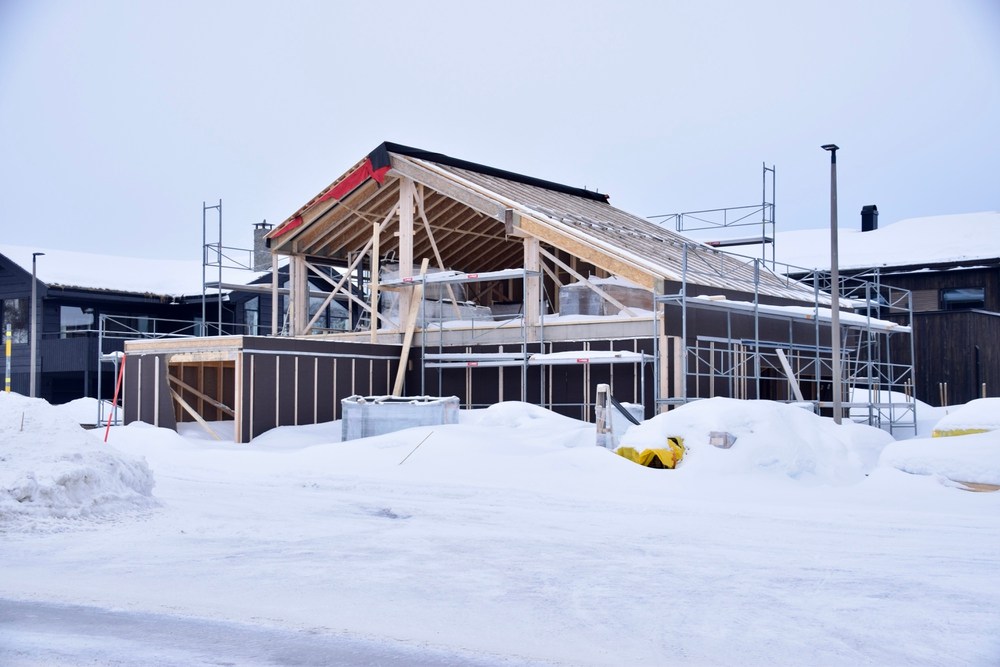
As winter approaches, builders risk exposures can shift significantly, making proactive risk management essential. From freezing temperatures and snow accumulation to water damage from burst pipes and weather-related construction delays, seasonal conditions can create costly challenges for projects of all sizes.
By discussing winter-specific exposures with clients before the cold weather arrives, agents can help ensure appropriate risk controls are in place and that their builders risk coverage aligns with the coverage they need.

2026 National Young Agent of the Year
Here are five ways agents can ensure their clients are prepared with adequate coverage for the winter:
1) Leverage expertise. Carrier risk control teams can help agents spot winter exposures before they become costly claims.
“My primary recommendation is that agents leverage the expertise of builders risk carriers’ internal risk control engineers when addressing winter exposure concerns,” says Lucas Hockenberry, president of inland marine at Intact Insurance Specialty Solutions. “These professionals specialize in identifying, evaluating and mitigating construction-related risks and can provide valuable guidance tailored to a project’s specific exposures.”
2) Identify specific rules of coverage. Winter losses can turn on policy conditions, so agents should review coverage requirements before temperatures drop.
“During the winter, you have got to protect any exposed piping,” says Jeff Benson, construction program manager, Victor Insurance Managers Inc. “Specifically, a lot of forms will say if the heat is not maintained in the building, it either doesn’t cover the loss or coverage is reduced, so you have to maintain heat in the structure if completed.”
As coverage varies from carrier to carrier, loss control procedures can save a client time and money “because if you have a claim, even if it’s covered, it’s going to delay the project and that delay costs the builder money,” Benson says.
3) Highlight key exposure concerns. “The three big exposures are heat, water and security—workers hate being cold and the ways to manage that cold can invite premises risk: temporary heaters, and the fuel sources that support them,” says Havis Wright, CEO of Triple Crossing Specialty.
More on Builders Risk


Additionally, “poorly managed cold leads to the next problem: a wet site. Damp sites due to failure of internal water systems—HVAC or internal plumbing—need to be thought about and managed,” Wright says.
“A wet site then becomes a security problem,” he explains. “Whether a site is monitored by people or electronics, water and dampness can impair the power running those systems and render them ineffective.”
4) Ask questions. Beyond engaging carrier risk control resources, agents can ask their clients a series of key questions regarding their winter construction exposures and provide recommendations based on their responses, Hockenberry says.
Some winter risk questions include:
- Will construction continue throughout the winter?
- Will the building be heated during construction?
- At what stage will the plumbing, HVAC and sprinkler systems be installed?
- Who is responsible for monitoring and maintaining heat?
- Are low-temperature alarms installed and actively monitored?
Agents can offer recommendations based on a client’s response, Hockenberry says. Risk control strategies might include delaying charging water systems as long as practical and maintaining continuous heat once systems are charged. Additionally, clients can install remote monitoring technology such as low-temperature monitoring devices with real-time alerts. Agents should also encourage clients to conduct daily inspections during extreme cold events. And, in the event of a heat outage, clients should have clear emergency response procedures in place.
5) Insure tools. When it comes to builders’ tools, “if an agent is writing open reporting, multi-location programs of generally unlimited duration, it may make sense to write the equipment on a single policy,” Wright says. “But on a lot of project-based work, they may want to avoid potential lapses in coverage, where a building is completed and turned over and the equipment coverage expires along with it.”
Agents need to understand what duration of coverage is needed and whether it aligns with the course of construction, Wright explains.
Further, “builders risk policies are primarily designed to cover the structure under construction and related project materials,” Hockenberry says. “When significant values are associated with mobile equipment or contractor-owned tools, a dedicated contractors equipment inland marine policy may be more appropriate.”
“However, where builders risk coverage is provided, obtaining complete equipment information upfront allows underwriters to apply appropriate limits, sublimits, deductibles, valuation provisions and risk controls,” Hockenberry says.
Olivia Overman is IA content editor.
Agency Management Solutions
Insurance Markets
This month’s issue

The November issue is out now!