A Brand Storytelling Guide
By: Arthur Germain
Brand storytelling—or “brandtelling”—starts with a simple statement. This is often referred to as an elevator pitch, but unlike elevator pitches that can sound rushed or canned, good brandtelling is something that can be remembered, repeated and rewarded.
The best way to tell a business prospect about your company is through a solid description and memorable stories about the products and services you provide. These brand stories can then be learned and repeated by everyone to convey a consistent message.
A word of caution: Your brand story may be inspirational, but is also must be real. And it must be your story. If your story isn’t based on facts about you and your company, you’ll be found out. The following are a series of questions to help organize your information to develop your own, powerful brand story:
Describe your brand (company, product service) in one sentence. This is the single most difficult exercise for most of us. We tend to over-think our responses. We use business jargon or we’re imprecise in our language.
Describe your typical brand customer in one sentence. Every company has a typical customer they want to reach. The customer that you want to reach is how you should describe your typical customer.
Describe the services/products that your brand delivers. Here you want to detail what you provide. No dancing (unless you’re a dance instructor). If you develop e-mail add-ons for Microsoft Outlook that help keep track of customers, then say, “We develop add-ons for Microsoft Outlook to help you keep track of your customers.” Don’t say, “We extend CRM based on the leading e-mail vendor platform.”
Describe the benefit that you provide your customer. What’s the big deal about your products or services? How will it benefit your customers? This question is all about WIIFM—What’s in it for me?
Describe what makes your company different. What is your value-add? What makes you different from others in your category? Why should a company hire your firm or purchase your products? When you finally put together all of your answers, you can develop a simple brand story like this one:
Communication Strategy Group is a marketing agency that helps companies tell brand stories that can be remembered, repeated and rewarded. We specialize in technology and professional services companies that desire to expand the awareness of their brands. Our services include public relations, collateral development, media and presentation coaching and brand evaluations. We help you to tell the story of your brand in ways that engage your audience. This results in increased brand awareness and supports your sales goals. Our team comprises experienced communications professionals— strategists, writers, journalists, technology marketers, public relations executives and media coaches—who work directly with you and your team to achieve results.
Think about how this approach differs from a lot of static numbers and bullet points! Imagine how much easier it is to tell a story to a group of people that they can then repeat—even when you’re not present. That’s the power of brandtelling!
By following these recommendations—and developing your story—you will be better able to speak with customers and partners about your company and differentiate yourself from competitors.
Arthur Germain (www.GoCSG.com) is principal at the Communication Strategy Group.
Carrier Connection: Westfield Insurance
Since it was founded by a group of Ohio farmers in 1848, Westfield Insurance has focused on the community it serves. The image of an old farmer sitting on a fence was the insurer’s moniker for 112 years until the company unveiled a new logo and the theme, “Sharing Knowledge. Building Trust®” in 2000.
“Our new theme acknowledges that insurance is a complicated product and it’s important to bring knowledge to the customer,” says Gary Christy, executive of branding and marketing communications at Westfield. “The trilogy logo represents the company, the independent agent and the customer coming together.”
Independent agents form a central part of Westfield’s branding effort. They spread the company’s name in their own communities by participating in events like the televised high school quiz shows Westfield sponsors in five major cities.
“We try to involve agents as much as possible,” says Christy. “We also use the quiz shows as an opportunity to get kids involved in insurance careers.”
Christy says Westfield’s biggest branding challenge is competing with the mass marketing of direct writers.
“The Trusted Choice® program is a great means of differentiating independent agents,” Christy says. “We include the Trusted Choice® logo on all of our marketing materials, and the Trusted Choice® Pledge of Performance® is the minimum standard we expect as a company.”
—Veronica DeVore
This month’s issue
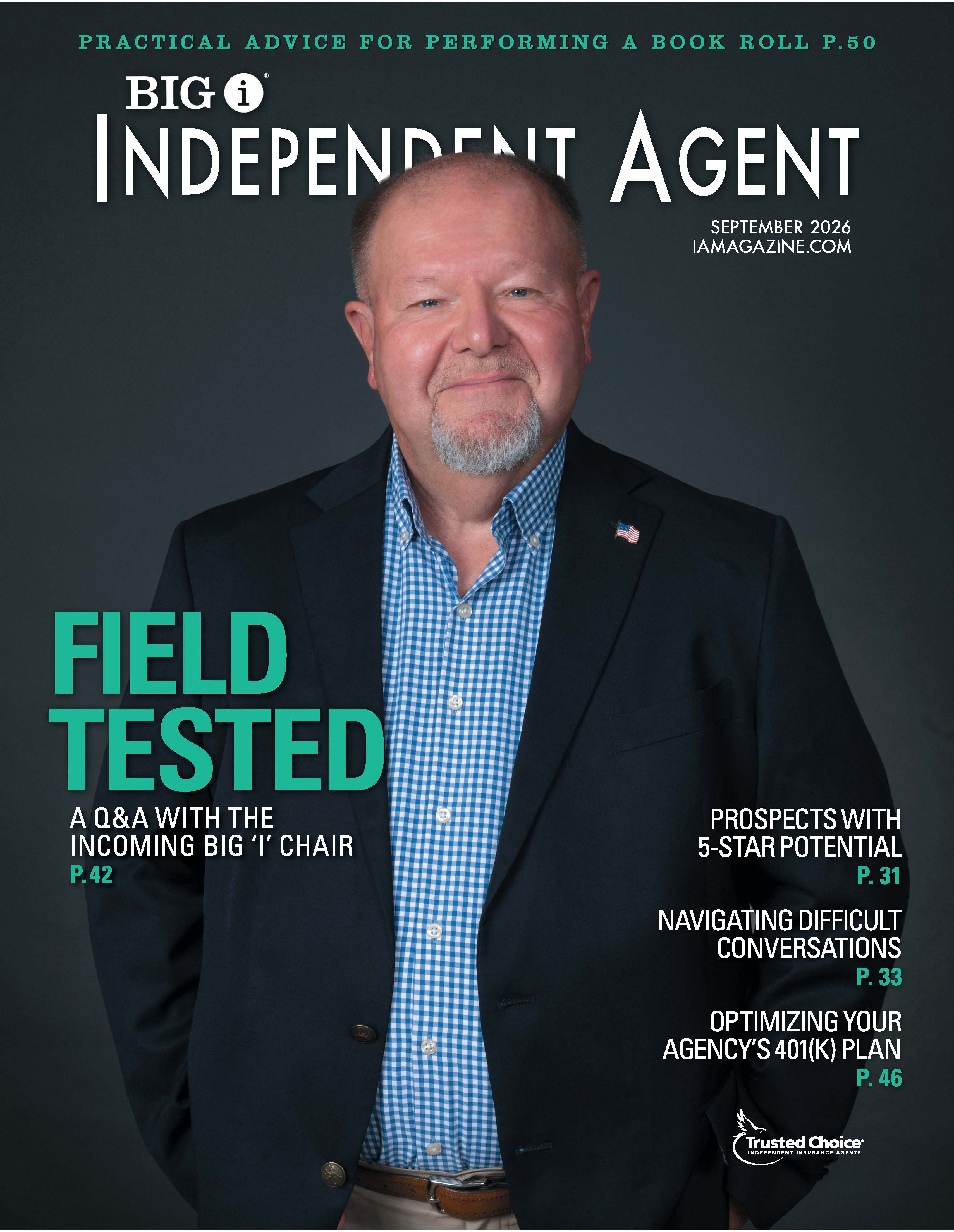
The September issue is out now!