The Decline of Brands…or Branding
By: Jack Gordon
There has been some concern lately about the decline of brands, with a variety of news articles and editorials prematurely reporting their demise. A number of different factors have been attributed to this decline, ranging from the unbalanced strength of retailers versus manufacturers to increased consumer savvy, strengthened through information leaned online. But, does this purport to the eventual demise of brands as we’ve come to know them?
I believe most of these news articles and editorials are missing the real point. It’s not the brand; it is the expertise of branding that is declining. Line extensions, SKU proliferation, product cannibalization and snippet advertising have converged in a rush to market among “me too” products—costing sales and costing brand managers their jobs.
This is not the first time we’ve lamented brand survival. Think back to the turbulent ’80s, where the growth of store brands and the pressure on pricing were certainly going to kill established high-priced branded products. However, we failed to see the demise of brands and instead, successful brand managers were able to grow and strengthen their brand.
It’s true that pressures existing on today’s brands make it hard to sustain strong franchises. The recent economic pressures affecting consumers’ pocketbooks will influence many to “trade down” from their high-priced brands; but many will return, if given sufficient incentives in a continuing rebounding economy—and remember, competition is a good thing.
What we might be seeing, in fact, is the decline of branding, not brands. The proliferation of line extensions, and the resulting effect of “line advertising;”the fact that more than two-thirds of many brand budgets are now spent on consumer and trade promotions; and reliance of many brands on15 second advertising has led to the creation of labels, not brands. No emotional connection is built and much of the traditional product testing, Internet testing and focus group activities are terribly outmoded and archaic.
The solution is to redouble efforts to personalize brands, find the emotional connection with a brand and go beyond the “go/no go” mentality. The ability to reasonably and objectively predict product and advertising success that motivates a consumer and builds long-term connections is the future of branding.
Although validated testing is key, creative brand-building is the overall answer. This comes from selling benefits proven to be important in the category and among current brand users, while, even more importantly, bonding emotionally with the brand’s customers. In categories consisting of mainly parity products, how consumers feel about your brand is more important than what they think about it. Understanding and reinforcing the brand’s emotional appeal is every bit as important as understanding its functional benefits.
Jack Gordon is CEO of AcuPOLL Research, Inc., a Cincinnati-based consumer product testing group.
Carrier Connection: MetLife Insurance
For years, Snoopy has been the mascot of MetLife Insurance. The loveable pup of Peanuts fame is the result of a bold and ever-evolving branding strategy that has taken MetLife from its origins in 19th century New York City into the21st century.
“Everyone in New York City knew the beacon on the MetLife building, so the foundation of all of our advertising is that we’re a company that will always be there for you when you need us,” says Bob Lundgren, vice president of product and marketing for MetLife Auto & Home.
In the 1970s, MetLife introduced Snoopy and underwent a large, somewhat risky branding change to bring more warmth to its brand.“It was a big transition to a fuzzy cartoon character,” Lundgren says. “There was a lot of debate around that, but the campaign has been widely successful.”
Today, the MetLife brand continues to evolve in response to customer needs. The company’s current “If” campaign, together with the image of a safety net, is designed to make customers feel secure about “the ‘ifs’ in life.” MetLife plans to personalize the safety net concept through targeted web tools to identify individual insurance needs.
“The Trusted Choice® brand fits perfectly into our safety net concept,” Lundgren says. “We have customizable national advertising available, where an agent can put his or her name and the Trusted Choice® logo at the bottom of the advertisement. It sends the message that MetLife has expert agents who can personalize solutions for customers.”
—Veronica DeVore
This month’s issue
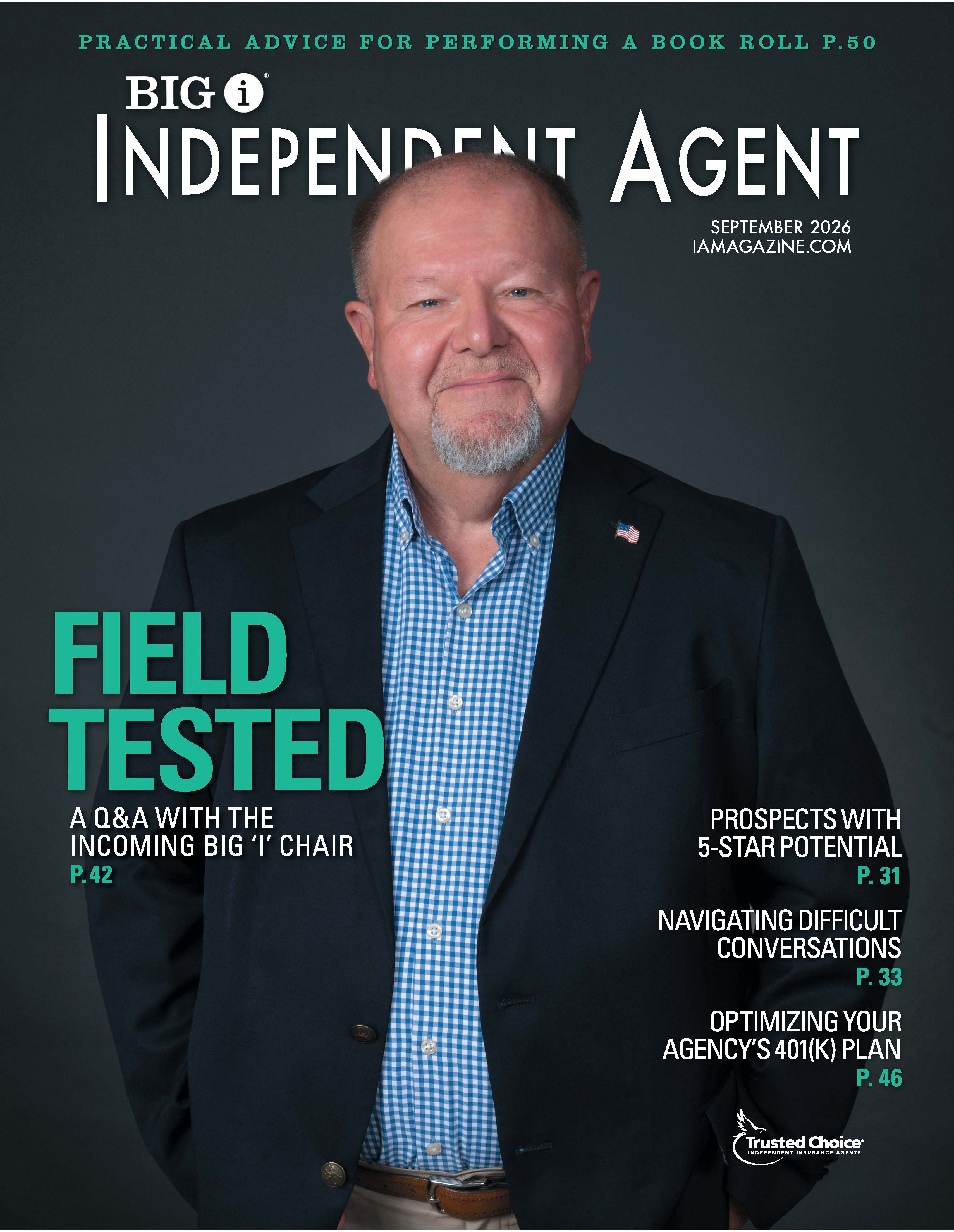
The September issue is out now!