Parties Include National Cat Plans in Platforms
By: Margarita Tapia
As hurricanes and tropical storms pounded U.S. coastlines in September, their impact extended all the way to Denver and Minneapolis at the Democratic and Republican national conventions.
This fall both major political parties, for the first time, declared that they will make a federal natural catastrophe policy (NatCat) a priority. The Democratic and Republican National Committees each included language in their official party platforms to address the issue.
The Democrat platform promises the development of “a national catastrophic insurance fund to offer an affordable mechanism for high-risk catastrophes that no single private insurer can cover by itself for fear of bankruptcy.”
The Republican platform calls for a “radical overhaul” of the “federal government’s system for responding to a natural calamity” and says that they “recognize the need for a natural disaster insurance policy.”
Neither party has provided details of their plan, but the Big “I” looks forward to working with the next administration and devoting time and resources to tackling this national problem.
Regardless of which candidate wins, the inclusion of NatCat language in both major party platforms is a welcome step in furthering this debate. More than half of all Americans live within50 miles of a coast and recent events continue to demonstrate the urgency for a solution. The collective value of coastal properties from Texas to Maine alone is nearing $7 trillion.
The Big “I” has been a leader on this issue for more than 25 years and has been calling on the insurance industry and government to recognize these economic realities. It is essential that partisan bickering is set aside to ensure that consumers have natural disaster insurance coverage that is both affordable and available without being a drain on the American taxpayer.
The Big “I” has testified before Congress numerous times to stress that “any discussion concerning the solution to insuring against future natural disasters starts with admitting there is a problem.” A major hurdle was crossed earlier this year—for the first time both the insurance industry and the government admitted that there is a problem and started working on concrete solutions. The next hurdle will be developing consensus among stakeholders and their competing plans. While this will not be easy, after 25 years of stalemate the Big “I” welcomes this new challenge and applauds the numerous parties that are currently aiding in the efforts to find sound, bipartisan solutions.
The Big “I” is encouraged by this new commitment from both major parties as progress in the direction toward a much needed federal natural catastrophe plan.
Margarita Tapia (margarita.tapia@iiaba.net) is Big “I” director of public affairs.
Democratic Party Platform:
Preventing and Responding to Future Catastrophes
“We will also work to prevent future catastrophic response failures, whether the emergency comes from hurricanes, earthquakes, floods, tornadoes, wild fires, drought, bridge collapses or any other natural or man-made disaster. Maintaining our levees and dams is not pork barrel spending—it is an urgent priority. We will fix governmental agencies like the Federal Emergency Management Agency, ensure that they are staffed with professionals, and create integrated communication and response plans. We will reform the Small Business Administration bureaucracy, and develop a real National Response Plan.
“We will develop a National Catastrophic Insurance Fund to offer an affordable insurance mechanism for high-risk catastrophes that no single private insurer can cover by itself for fear of bankruptcy. This will allow states to deal comprehensively with the economic dislocation of natural disasters.”
Republican Party Platform:
Domestic Disaster Response
“Americans hit by disaster must never again feel abandoned by their government. The Katrina disaster taught a painful lesson: The federal government’s system for responding to a natural calamity needs a radical overhaul. We recognize the need for a natural disaster insurance policy.
“State and local cooperation is crucial, as are private relief efforts, but Washington must take the lead in forging a partnership with America’s best run businesses to ensure that FEMA’s Emergency Operations Centers run as well as any Fortune 500 Company. We must make it easier for both businesses and non-profits to act as force-multipliers in relief situations. We believe it is critical to support those impacted by natural disasters and to complete the rebuilding of devastated areas, including the Gulf Coast.”
—M.T.
This month’s issue
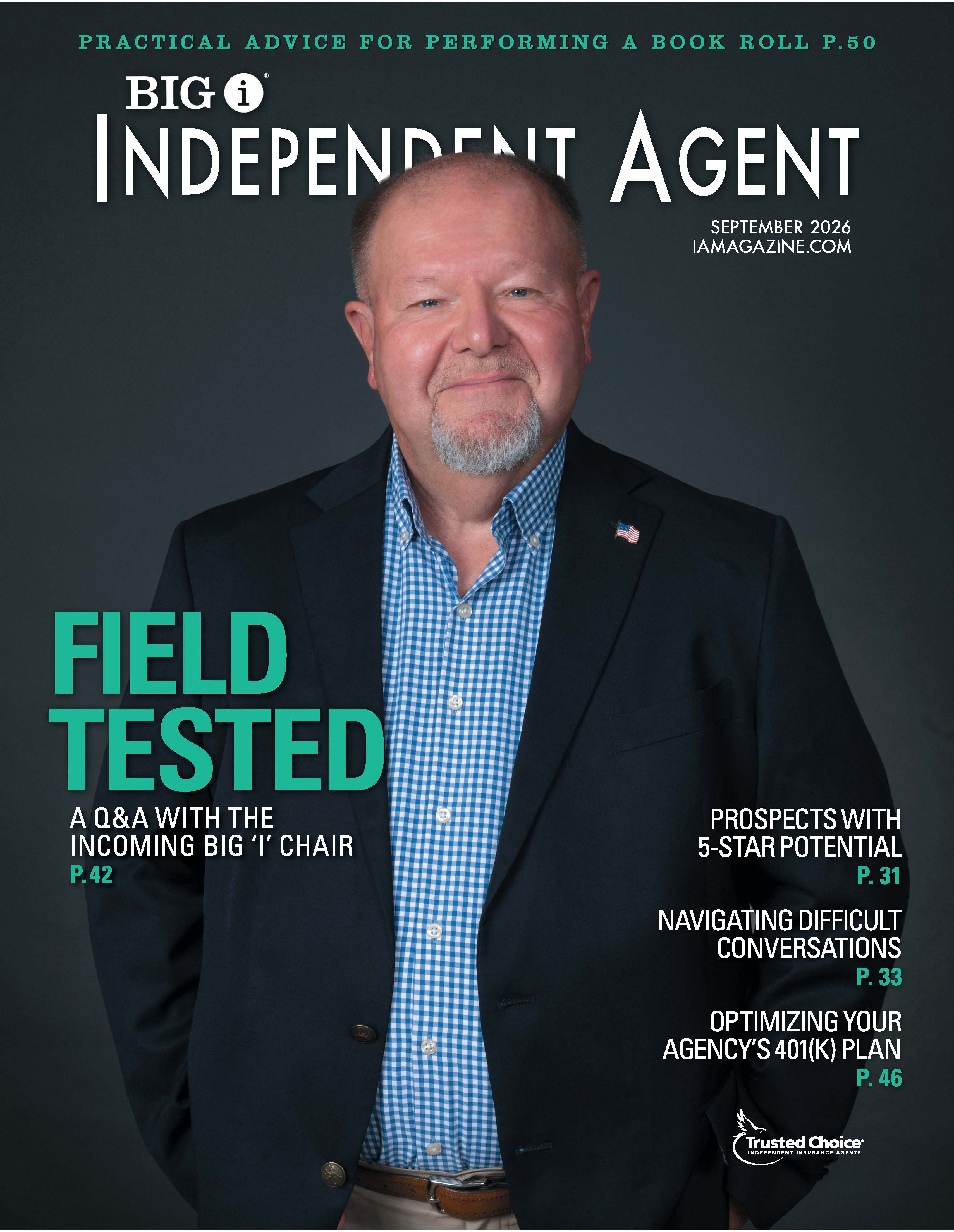
The September issue is out now!