Creating Connections
By: Katie Butler
His family had left behind its connections, too— and not just any connections. His great-grandfather, Jose Miguel Gomez, served as Cuba’s president from 1908 to 1912, and his grandfather Miguel Mariano Gomez was elected president in 1936. When his parents made the decision to flee the country, they left behind everything for the promise of a better life for their family.
Since his arrival in the United States, Soto has built his life on creating connections—with his family, with his agency, in his community and in the insurance industry. And in spending only a few minutes with him, you quickly learn why he is so good at it. His charisma and love of people is evident. And now he is ready to create more new connections on behalf of the Big “I” as its 103rd president.
Early Influences
Since leaving Cuba, Soto has never been back. “I’m an American by invitation and by choice,” he says. “When you move from a situation where you are in the majority to being in the minority, it teaches you tolerance and forbearance.” He quickly learned English and says he is a big believer in the concept of immersion. “When you put someone in a situation where they must, then they shall,” he says. Soto notes that learning American customs was almost as daunting as learning the language: His biggest early cultural epiphany was that dates in America weren’t chaperoned!
One American cultural observation he made that he did not adopt was the idea of work being more important than family. “There is something very American about the idea that a job is so important to you that you go wherever it takes you,” he says, noting that the concept most likely comes from the Great Depression and the need to put food on the table no matter what.
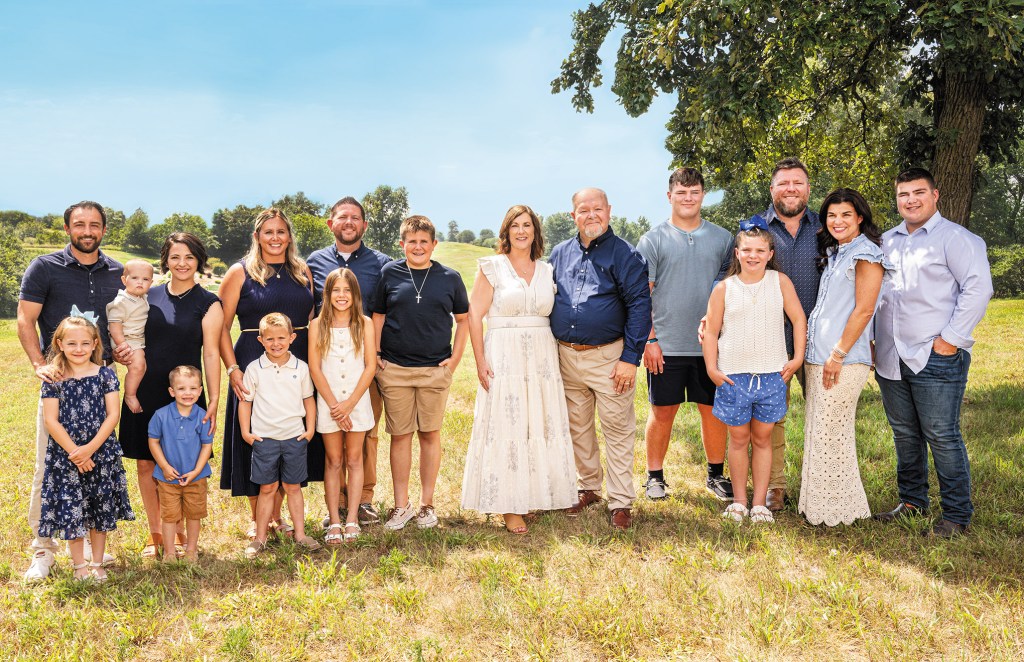
But when Soto’s family landed in Miami, they didn’t leave. In fact, when Soto attended a family wedding in 2005, more than 80 people—all relatives—were in attendance. “The following month we had all of them over to our home for a family reunion,” he says. The importance of family in close proximity is something that he has subliminally passed down to his own children. Sons Alex, a lawyer, and Patrick, in advertising, both still live in Miami and visit Soto and his wife Pat frequently. “We’re delighted that they are here. There are benefits to staying in the same town,” Soto says.
Intro to Insurance
Soto certainly felt the family pull when he was just starting out in his own career. “While in graduate school, I interviewed in Miami. My family was incredibly important to me and there was no point in going anywhere else to work.” Like many in the insurance industry, Soto originally planned for his career take a completely different path. He graduated early from Florida State (where he met his wife, Patt, a lifelong middle school science teacher who was selected in 1995 as one of the top three science teachers in America by the National Science Teachers Association) and had been accepted to law school. But rather than waste time before starting his law degree, he decided to take some MBA courses at Florida State. One of those courses was risk management…and he decided to make insurance a career.
Soto went to work for independent agent Tom Pennekamp in 1972 and the agency eventually became known as Pennekamp and Soto. He bought out Pennkamp’s interest in 1997, and merged with two local competing agencies (Thomas & Cook Insurance and Worley, Humphrey and Ball) to form InSource. But Soto had a personal history with the other InSource partners that pre-dates the merger in 1997—all of the partners have been involved in the local, state and national associations. “We strongly believe in supporting our industry and trade associations,” Soto says.
The agency’s mix of business is approximately 20% benefits, 50% commercial with the remainder as personal lines business. Each partner has a different function within the company. As president, Soto chairs the board meetings, is liaison to the personal lines department and reviews all company contracts. Every partner has corporate responsibilities but does not stray far from their producer roots—each still has his own book of business.
InVEST Success Story
When asked about his clients—primarily a commercial lines book—Soto mentions Account Executive Sarah Gonzalez in the first sentence. Early on in his career, Soto taught InVEST classes at Miami-area high schools. Gonzales was a student in one of his classes, and he hired her as a high school junior to help at Pennekamp and Soto. Thirty years later, Gonzalez is still working with him.
“She takes care of my clients; they trust her,” he says. “When I’m traveling, she consults with clients and has my complete confidence. She is essential and the reason I can do what I’m doing.” Soto is also quick to praise the entire InSource team, noting that a lot of the employees have been with the company for many years. “They work hard and are our greatest asset—I can’t say enough about them,” he says.
How can the industry create a pipeline of employees like Sarah Gonzalez? Soto’s straightforward answer: “We need a better farm system.” The industry needs to bring more young people in—perhaps having them start by working in the mailroom and gradually giving them more responsibility. Then, treat them well. Soto notes that his agency has had the best results with employees they have groomed over time. “If we were smart, we’d constantly be looking for great employees and hire people when we don’t need them—rather than filling personnel needs as they come,” he says.
Setting Association Priorities
Looking toward his year as president, Soto is clear in his vision of the association’s role in serving its members. “All of the activities of the association should be activities that promote the independent agency system or activities that defend the independent agency system. There should almost be no third! Everything needs to fall into one of those two categories, and there are some incredibly big issues facing us.”
Soto notes the first big issue the association must engage in is who will govern the industry: federal regulators or state regulators? In the national debate, Soto notes that the association’s position is squarely where it should be: national standards with local control and state regulation. “Fortunately, 99% of what is good for us as agents in terms of regulation is good for our clients,” he says. In the regulation debate, Soto emphasizes that the association has a very important role to play: specifically, educating members of Congress so that they gravitate toward the middle ground and attempt to move the SMART Act legislation in pieces.
The second issue Soto plans to work on during his presidency is one that is close to his heart: natural disasters and their industry aftermath. He crystallizes the issue into two choices. “How we handle disasters should be a national debate: We can do it thoughtfully ahead of time, purchase coverage and plan for it, or we can send in Air Force One post-disaster and throw FEMA money out the back of the plane,” he says. While the impact of hurricanes is top of mind due to recent history, Soto points out that other occurrences like earthquakes, for example, present just as daunting of a challenge. “In Utah, a significant portion of the state is on a fault line and only 20% of the population buys earthquake coverage; in California, only 14% buy earthquake coverage; and in Florida, we sell more flood insurance than anywhere else in the country and only 34% of resident purchase it.”
With the majority of U.S. residents living in a coastal area, Soto says dealing with disasters is a long-range and problematic issue. What can agents do? He shares a disappointing anecdote from his own agency. A year ago, InSource sent a letter to every client offering an insurance check up, and the mailing included information on flood insurance, business interruption and other coverages. Out of 4,000 letters sent, the agency only received 10 phone calls from clients interested in following up on the suggestions. But Soto says agents need to keep trying to educate their customers at every opportunity. “When a client is buying home insurance, agents should automatically quote flood coverage,” Soto says. “People aren’t going to perceive it as a peril. As an industry and a country, we need to do something to spread the risk.”
The final industry issue that Soto sees as a priority for his presidency is producer compensation. Soto says that while New York Attorney General Eliot Spitzer did uncover a number of wrongdoings and was right to prosecute them, somewhere along the way the debate morphed into a debate over the way independent agents are compensated. “Payment for excellence and peak performance is right, legal, effective— and used in every facet of commerce in the United States,” he says. (For more of Soto’s thoughts on the producer compensation issue, see the October IA’s “President’s Voice” column.)
Soto says he plans to take advantage of the national state board of directors as a body to work on these issues. “Our board of directors collectively has a ton of wisdom and I plan on utilizing them,” he says.
Branding Trailblazer
Soto was among the volunteer leaders who were instrumental in starting Trusted Choice®—and many consider him the patriarch of the program. In the brand’s research phase, Soto recalls that consumer focus groups shared the type of experience they wanted in purchasing insurance—and those consumer comments formed the original Trusted Choice® pledge of performance. Soto is excited about the progress that’s been made, but notes that the brand still isn’t mature. “It’s going to take a long time—ours is a grassroots brand,” he says.
Soto says the key is for Trusted Choice® agencies to use the brand in their daily interactions with customers—more power comes from the local level than the national level. “Ninety percent of what happens with the brand will be what I do and what my agency does—not what’s on TV,” Soto says. “In my agency I have meetings with all of my departments and tell them why we’re involved with Trusted Choice®. We include the pledge of performance in all of our proposals, and invariably clients say, ‘What’s that?’ and they are impressed.”
Soto also emphasizes the need to bring more companies into the program and says the value in their participation is clear. Soto feels companies should be promoting the delivery system, the independent insurance agency system. Carrier advertising does little to push clients through doors. In his 34 years in the business, he remembers clients asking for a specific company only five times. “The independent agency system works because my clients have confidence in me. I suggest a company and my client will say; ‘Oh, I have heard of company X, ’ ” Soto says. “And if they haven’t heard of the company, they will ask me if that is a good company. Agents validate their carries to their clients.”
Full Plate
While Soto acknowledges that the association is facing a lot of industry challenges, he says he is excited to have the opportunity to be involved. “These are the most important issues independent agents are facing, whether its compensation, natural disasters or the health of our system,” Soto says. “At the end of the day, if we can have one or two victories on any one of these topics, we will have done well.”
Katie Butler (katie.butler@iiaba.net) is editor in chief of IA.
Market Crisis Hits Home
One of the reasons Soto is so passionate about addressing natural disasters is because he is seeing first-hand how disasters can dislocate markets. “The property market in Florida is at a real crisis—the only thing worse than expensive insurance is no insurance,” he says. Soto is hopeful that without another major storm there will be a correction—currently, hysteria is driving pricing.
“The implications are societal,” he says. “People of modest means will have to leave coastal areas if this continues.” In order to help InSource employees deal with the stress, the company brought in stress managers to offer half day seminars in between periods of employees having to deliver bad news to customers. The challenge of keeping good customer relations requires great communication, he says.
“The market is so tight that people want to know we have looked for other markets—if your price is going up 70%, you better prove that you have researched all of their options, which requires communication skills.”
Association Networking Pays
For young producers, Soto has this word of advice: start early and volunteer for local committees. In Miami, Soto was chairman of the Young Agents Committee. “Ironically, on that committee 35 years ago were my future company partners,” he says. Soto rose through the ranks of the local association board in the mid ’70s and was president of his local board in 1980. He then served as the president of FAIA in 1994. On the national level, Soto was elected to the executive committee in 2001 and previously served as chair of IIABA’s Communications Committee Branding Task Force, which developed Trusted Choice®, among other posts.
This month’s issue

The September issue is out now!