High Net-Worth: What’s Fueling the Shift Toward Self-Insurance and How Agents Can Help

One in 5 high net-worth (HNW) clients has struggled to get homeowners insurance, rising to 30% in high-risk states, according to the Private Risk Management Association (PRMA) “2025 PRMA Insights Survey.” Additionally, 63% have paid higher premiums, and over half have accepted lower coverage or new exclusions, according to the survey.
Today, many HNW individuals are self-insuring instead of relying on traditional insurance—and it appears to be a growing trend.
“Within the past two years, there’s been a lot of changes in the HNW market, caused by a pretty volatile rate environment, particularly for catastrophe-prone areas, increasing inflation, an unpredictable litigation environment and reinsurance costs that all have put a lot of pressure on carriers,” says Katherine Frattarola, executive vice president and head of HUB Private Client. “You then had some carriers that wound up disaggregating their book and retrenching from the markets, as well as certain carriers that said they’re not going to write anymore HNW business in either a neighborhood, a town or regionally.”

What Are Your Goals for 2027?
“In certain situations, they may have pulled out of the state or the marketplace completely,” Frattarola says.
The result is an increase in the number of HNW clients looking to self-insure. However, self-insurance doesn’t mean no insurance at all. “That’s somewhat of a myth,” Frattarola says. “It’s not that we didn’t see more of it; we did. But when we saw more of it, it was for homes that were between $50 million and $100 million. With the $3 million homes, we saw clients taking higher deductibles, a function of self-insurance.”
As rates climbed and coverage tightened, some HNW clients compared their long-standing premiums with the recent increases and concluded that the changes felt unfair. In response, a number chose to assume more risk themselves.
Independent agents played a crucial role during this period, serving as trusted advisers and helping clients make sense of the shifting economics of coverage.
Additionally, when evaluating risk profile and tolerance, “individuals need to reflect on a total loss scenario,” Frattarola says. “You could have $30 million on your balance sheet, but if your home is $6 million and there’s a total loss scenario, that’s 20% of your balance sheet. Are you prepared to assume that level of risk?”
More on High Net-Worth

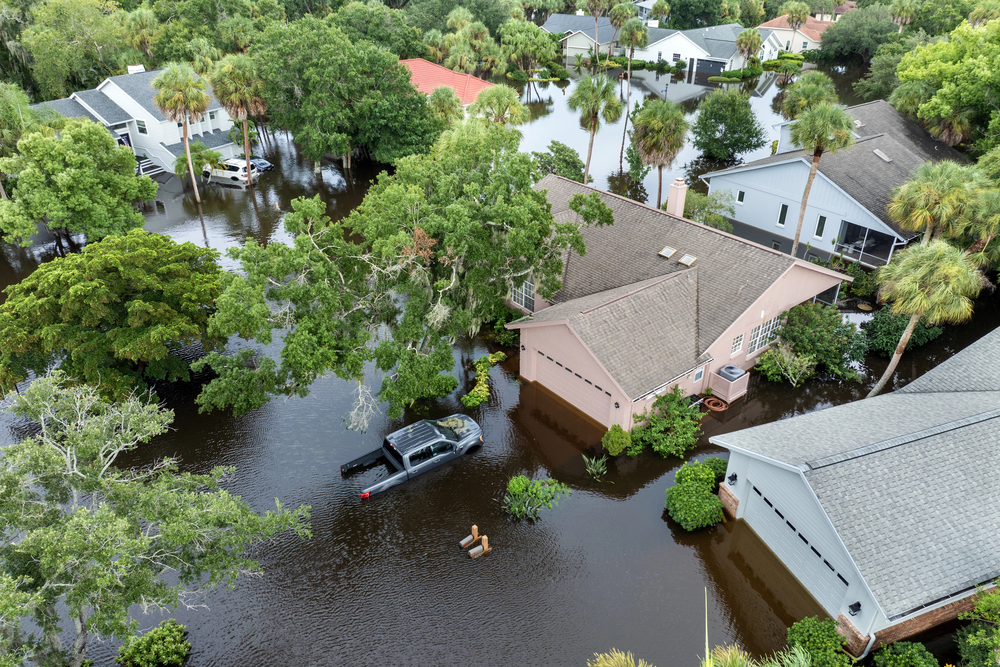

“We’ve seen that a lot in California, where wealthy individuals who had beautiful homes never fully envisioned a total loss scenario,” Frattarola adds.
This is where the role of an agent is unmatched, particularly for clients considering self-insurance. “As more homeowners assume part of the risk themselves, agents and advisers remain essential—their role is evolving from policy placement to strategic risk adviser,” says Diane Delaney, executive director of PRMA.
“When homeowners choose to self-insure, whether by taking higher deductibles or dropping certain coverages, they often lose access to critical support services, like loss-prevention programs, pre-storm alerts and vetted vendor networks that mobilize after a disaster,” Delaney says. “Those are the very tools that can determine whether recovery takes days or months.”
Meanwhile, a key blind spot for many HNW clients is liability. “Even financially secure families need robust umbrellas and excess liability protection,” Delaney says. “One lawsuit or catastrophic injury can cause far more lasting financial damage than a property loss.”
Additionally, and particularly acute in the HNW space, is the valuation of collectibles. Sixty-nine percent of HNW clients own valuable collections, including jewelry, art and cars, but many lack comprehensive coverage, according to PRMA.
While more affluent families are increasingly choosing to 100% self-insure, for many people, dealing with a total loss financially—as well as having the time and energy to handle it—may not be feasible. “We’ve seen many more people take higher deductibles rather than fully self-insure,” Frattarola says. “You’re taking on greater risk, but you’re not doing it 100%.”
Olivia Overman is IA content editor.
Agency Management Solutions
Insurance Markets
This month’s issue

The October issue is out now!