3 Tips for Agents in a Growing Special Events Market

The global events industry market size was valued at $736.8 billion in 2021, and is projected to reach $2.5 trillion by 2035, growing at a compound annual growth rate (CAGR) of 6.8% from 2024 to 2035, according to Allied Market Research.
“Special events aren’t going anywhere, and they continue to get more complex,” says Spencer Batt, president, American Specialty Insurance & Risk Services Inc.
“The leading subsegments where the largest growth is projected are local and community sports events that include youth sports, 5Ks and running clubs; corporate events, such as business meetings and team building events; live music performances; and weddings and social parties,” Batt says. “E-sports events are a relatively newer entrant to the special events space that has continued to grow.”
make Your Voice heard at the 2026 Big “I” Legislative Conference
April 22-24 Washington D.c.
What has changed in the special events market since the coronavirus pandemic is that attendees now have new expectations for events, prompting organizers, and consequently the insurance industry, to do more.
One key area of growth is on the corporate side. “That’s where I see the most growth, just because corporations are really trying to get people together to collaborate and to be able to have functions together,” says Travis Verdino, managing director at Burns & Wilcox. “With a lot of corporations having people all over the country, you have to have a draw to get employees to want to go to these types of events.”
As commercial clients hold more elaborate special events, finding the right insurance can prove an opportunity for an agent to showcase additional value. Here are three tips:
1) Work with an experienced provider. “We recommend agents make sure they work with a company with experience in the special events space that they can trust to provide tailored coverage, effective claims management and loss control materials to their insured,” Batt says.
As organizations hold more events, agents can be the conduit of essential coverage information for their clients. “We’re seeing right now that larger corporations are hosting events and assuming that their general liability policies will extend coverage,” Verdino says. “There are certain policies that will extend coverage to a seminar or a dinner party, but if you’re hosting an event at a nightclub, it’s probably not going to extend that far.”
More on Special Events



“That’s something we see where they assume it was covered under the other policy, and then at the very last minute, they find out it’s not. And now they’re trying to scramble to get event coverage for the actual event,” Verdino explains.
2) Know the event details. “Find out as much information about the event beforehand, because carriers don’t like to be surprised,” Verdino says. “When they’re surprised, they’re a lot more combative than if we give them all the information up front.”
If alcohol or marijuana is available at an event, “carriers can be concerned because of the impairment issues,” Verdino says. Nevertheless, carriers are starting to offer those coverages because they’re seeing an opportunity for it. “It’s not like a liquor liability policy where the carrier may offer $1 or $2 million in coverage; they typically offer up to $100,000,” Verdino says. “So it’s smaller limits.”
Further, more elaborate events mean more vendors. Agents should find out the details about “what vendors plan on selling and are doing while they’re there, making it known that carriers don’t want to see things, such as offering marijuana, because it’s typically going to end up in a lawsuit,” Verdino says. “Doing a few minutes of research on the vendors can save a lot of time.”
3) Understand exclusions in coverage. As the special event industry transforms, so too does the coverage offered by carriers. “Agents need to look out for exclusions within the policy that may not have existed in the past,” Batt says. “Exclusionary language for liquor liability, assault and battery, and punitive damages is becoming more commonplace.”
“Ensuring clients have the proper coverage for their event is increasingly important in today’s marketplace, as not all policies offer the same coverage options as in the past,” he says.
Olivia Overman is IA content editor.
Agency Management Solutions
Insurance Markets
This month’s issue
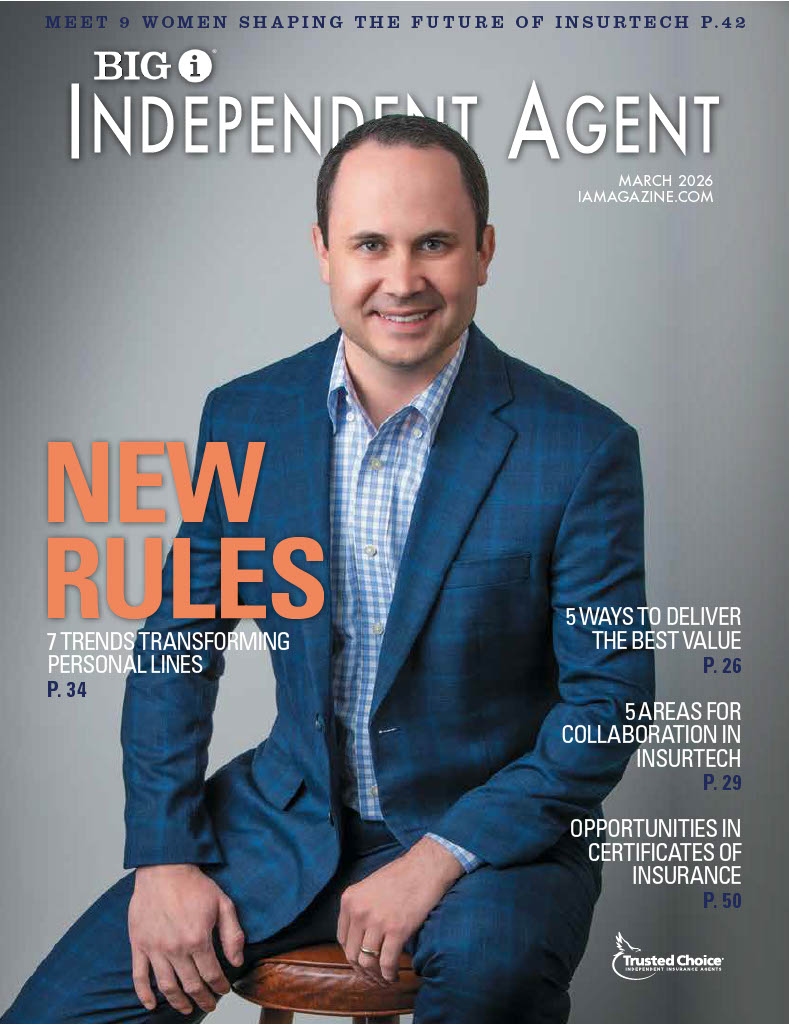
The March issue is out now!