Over 800,000 Without Power as Deadly Cold Grips the Country
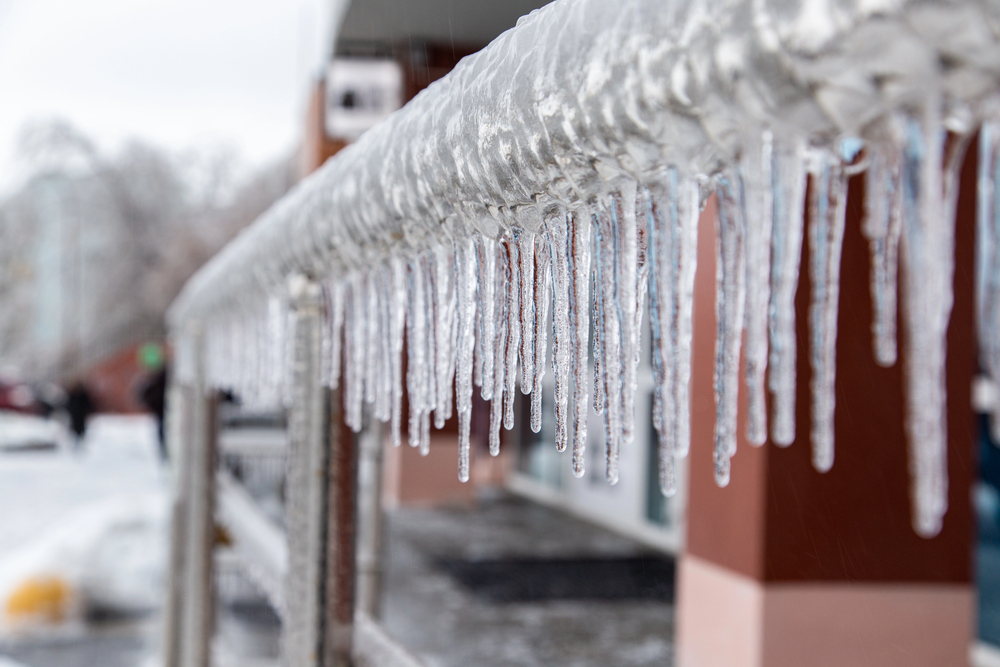
At least 12 people have died and more than 800,000 homes are without power as a deadly winter storm swept across the U.S. over the weekend. Furthermore, Sunday was the worst day for flight cancellations since the pandemic, with over 19,000 flights canceled during the storm.
On Friday, the National Weather Service (NWS) warned of “great swaths of heavy snow, sleet, and treacherous freezing rain,” as NWS meteorologist Bryan Jackson, dubbed it “extreme, even for this being the peak of winter.”
In response, President Donald Trump approved 12 federal emergency disaster declarations for Arkansas, Georgia, Indiana, Kentucky, Louisiana, Maryland, Mississippi, North Carolina, South Carolina, Tennessee, Virginia and West Virginia, enabling states to access critical federal resources to supplement their response efforts.
The storm’s reach extends across hundreds of miles, bringing multiple weather hazards to different regions. Snow totals of 6 to 12 inches were reported from the Plains through the Ohio Valley and into the mid-Atlantic and Northeast, with some totals topping a foot. Subzero temperatures and ice also covered large parts of the southern U.S.

make Your Voice heard at the 2026 Big “I” Legislative Conference
April 22-24 Washington D.c.
On Monday morning, 800,000 customers were still without power, according to AccuWeather, which is down from a peak of 1.14 million on Sunday afternoon. Tennessee was the worst-hit state, with more than a quarter of a million customers in the dark. Meanwhile, several counties in Mississippi were more than 90% out.
The post-storm freeze is now expected to put immense pressure on the U.S. power grid, with surging demand and snow and ice bringing down power lines due to their weight. A quarter inch or more can cause tree and power line damage, while a half inch—which 12 states recorded during this storm—can add as much as 500 pounds of weight to power lines.
Over 250 million people are under cold alerts for frigid temps that will linger for days, raising fears for those without shelter or power. “Freezing temperatures for multiple nights are forecast as far to the southeast as the north-central part of the Florida Peninsula,” said Alex Sosnowski, AccuWeather senior meteorologist.
“The snow and the ice will be very, very slow to melt and won’t be going away anytime soon, and that’s going to hinder any recovery efforts,” said Allison Santorelli, a meteorologist with the National Weather Service.
As of Monday morning, 56% of the contiguous U.S. was covered in snow. It was the second-highest snow coverage in the U.S. in 20 years, according to NOAA, behind 59.7% in 2023.
According to the NWS, the major winter storm will continue to impact the Northeast U.S. today with heavy snow as it shifts away from the East Coast. Frigid temperatures will affect the eastern two-thirds of the U.S. this week, with numerous record lows forecast. Sub-zero lows are expected nearly every morning from the Northern Plains through the Ohio Valley and into the Northeast.
However, the worst of the winter storm has passed, according to AccuWeather, with dry weather returning to many areas where rain, snow, sleet and ice fell over the weekend. Some snow is still falling over northern New England and parts of Ontario and Quebec, while a few areas across the Northeast are seeing lingering flurries.
Winter storms caused nearly $6 billion in insured losses nationwide in 2022, the second-highest year on record for winter storm insured losses in the last 10 years, according to Aon.
The 2021 Polar Vortex, which primarily affected the Midwest, Great Plains, and Texas, caused roughly $18.6 billion in insured losses, underscoring the cost of winter weather events, according to the Triple-1.
Will Jones is IA editor-in-chief.
News Types
Agency Management Solutions
Insurance Markets
This month’s issue

The March issue is out now!