Insurance Implications When Property Owners Bring Their Energy Grid In-House
By AnneMarie McPherson Spears
As energy reliability, cost volatility and resilience move higher on boardroom agendas, more property owners are taking a step that would have seemed extreme just a few years ago: bringing their energy supply chain in-house.
From rooftop solar and battery storage to microgrids and on-site generation, energy ownership is quickly becoming a strategic asset. For independent insurance agents, the shift creates both new advisory opportunities and new risks to manage.
“Supply-chain fragility is what’s driving the biggest need: geopolitical risks, extreme weather events and global commodities market volatility,” says Lindsay Shipper, head of commercial property, North America, at Beazley.

2026 Big “I” Legislative Conference
April 22-24 Washington D.c.
Data centers are the primary industry behind the in-house energy shift, with advances in artificial intelligence (AI) driving a boom in data center construction and the power needed to operate them.
“These massive data centers require uninterrupted power, and being able to own renewable generation on site reduces the disruptions, especially with many data centers being built in more rural communities where infrastructure can’t support them tying into the traditional electrical grid,” Shipper says.
Commercial real estate owners also have much to gain from energy independence. “Energy is a significant variable cost for many real estate portfolios, so when you bring that procurement in-house, you gain leverage to negotiate optimized rates, reduce volatility and enhance your budgeting precision,” she says. It also provides them the opportunity to integrate renewables to meet environmental, social and governance (ESG) requirements, she points out.
Other industries participating in the energy trend include multifamily housing operators, manufacturers, healthcare systems and even retail and hospitality chains.
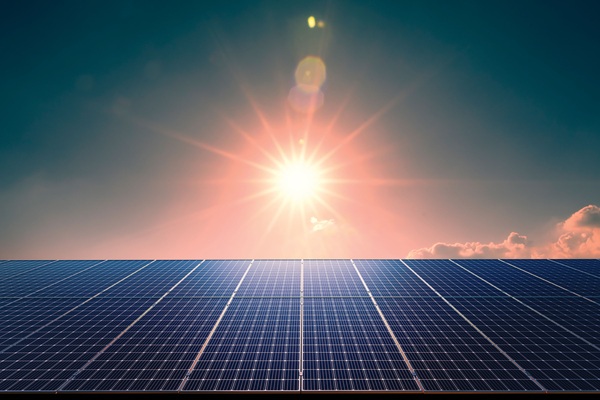
But with ownership comes exposure. “Solar panels are the easiest entry point into energy ownership for a lot of industries, but they are also one of the more vulnerable types of energy,” Shipper says, noting that weather, roof integrity and fire hazards all come into play.
An on-site battery energy storage system (BESS) raises concerns as well. “These are critical to energy resilience for a lot of companies, but they also have significant risks,” she says. “Thermal runaway is one of the biggest concerns. They overheat, and it becomes uncontrollable and notoriously hard to extinguish.”
Operating off grid can also magnify loss severity. “If your energy platform goes down, you no longer have a contingency plan, which leads to extended loss recovery and quite significant business interruption claims,” she says. “And in cases of equipment failure, some of this equipment is very expensive and can’t be replaced on a short turnaround, which also leads to significant delays.”
These evolving risks are “forcing carriers to get out of their silos,” Shipper says. Traditional all-risk property policies may cover physical assets, but environmental, equipment breakdown and renewable-specific coverages increasingly need to work together.
More From the April Issue



“We’re also seeing significant value increases for these assets, which is leveraging the maximum available capacity in the market and forcing carriers to partner to provide adequate limits,” she says. “We’re seeing renewable-specific policies that are being married with bespoke engineering services and loss prevention programs, more utilization of parametric products, and some larger clients starting to utilize captives.”
For independent insurance agents seeking to help clients interested in taking their energy in-house, “the first step is helping them understand what the risks are: fire hazards, natural catastrophe hazards, the strength of their roof and BESS storage,” Shipper says.
Additionally, clients need to understand the increased cyber risks they’re undertaking, as well as engineering and maintenance needs and contingency plans for grid outages.
AnneMarie McPherson Spears is IA news editor.
Categories
Insurance Markets
This month’s issue
The April issue is out now!