Is Personal Property Stolen From a Storage Facility Subject to a 10% Limit?
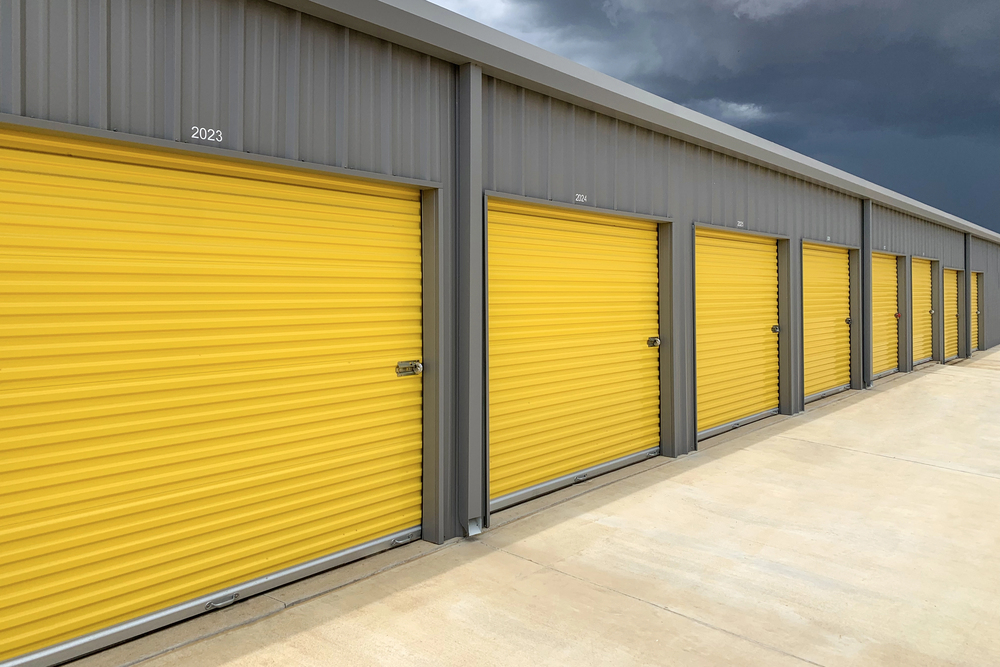
An insured wants to downsize. They sell their house, move in with in-laws and buy a tenant homeowners policy with a Coverage C limit of $105,400. Meanwhile, they are building a new home, which is also insured with a course-of-construction endorsement, and have placed the majority of their personal property in a storage facility.
However, thieves break into the storage facility and steal everything. The loss is approximately $30,000, but the insurer says a 10% limit applies due the policy wording in the Coverage C – Personal Property 2. B. section that limits liability for personal property owned or used by an ‘insured’ and located in a storage facility.
Yet, there are limitations in this section, such as when the property is “usually located in an ‘insured’s’ residence, other than the residence premises.”
Q: Does this limitation apply, or any of the other limitations in this section, raise the limit of loss to cover the $30,000 loss because the insured is living with in-laws and in constructing a new home?
Response 1: I have to agree with the adjuster on this one. The residence premises under this policy are the in-laws’ house. The exceptions only apply when the property is moved from the residence premises for one of the three listed reasons. If I understand your story correctly, the property went straight from the insured’s old home to the storage facility. It was never at the residence premises, so it could not have been moved from there .
Response 2: I agree with the carrier. This limit could have been increased using the PP 06 14 Increased Amount of Insurance for Personal Property Located in a Self-Storage Facility endorsement.
Response 3: I think it’s difficult to make an argument that the $30,000 is usually located at an insured’s residence. The property has never been located at the in-laws’ house. To provide an option when 10% is not adequate, ISO developed endorsement HO 06 14 – Increased Amount of Insurance for Personal Property Located in a Self-Storage Facility.
Response X: I found this in the IRMI Personal Risk Management and Insurance manual about this wording:
- Self-Storage Facilities. The provision, added to the 2011 version, expressly limits personal property, owned and used by an “insured,” located in self-storage facilities to 10 percent of the personal property limit (or $1,000, whichever is greater). This limit, however, does not apply to personal property
(1) moved from the “residence premises” because it is (a) being remodeled, renovated, or repaired; and (b) not fit to live in or store property in; or
(2) usually located in an “insured’s” residence, other than the “residence premises.”
For example, assume the insured stores excess furniture in the self-storage facilities because his house is already overflowing and he has no more available room. This furniture is subject to the 10% Coverage C limit. But if these items were there temporarily because the insured was renovating some of the rooms in the home, the 10% limitation does not apply. Instead, the full personal property limit applies, since this added loss exposure is temporary.
Additional limits of coverage for personal property located in a self-storage facility can be added via the Increased Amount of Insurance for Personal Property Located in a Self-Storage Facility – HO 06 14 endorsement.
However, your client’s situation is a little murkier because the current “residence premises” is not being “remodeled, renovated, or repaired.” Also, the property will usually be located in an insured’s residence that is in the process of construction.
On the other hand, it used to be located at another residence. I come down on the side of the 10% limit not applying. It appears to me that the 10% limit applies to property permanently stored in the self-storage facility, not property stored there in between moves.
This question was originally submitted by an agent through the Big “I” Virtual University’s (VU) Ask an Expert service, with responses curated from multiple VU faculty members. Answers to other coverage questions are available on the VU website. If you need help accessing the website, request login information.
This article is intended for general informational purposes only, and any opinions expressed are solely those of the author(s). The article is provided “as is” with no warranties or representations of any kind, and any liability is disclaimed that is in any way connected to reliance on or use of the information contained therein. The article is not intended to constitute and should not be considered legal or other professional advice, nor shall it serve as a substitute for obtaining such advice. If specific expert advice is required or desired, the services of an appropriate, competent professional, such as an attorney or accountant, should be sought.
Agency Management Solutions
Insurance Markets
Big I Programs
This month’s issue

The March issue is out now!