Where Has All the Discretionary Income Gone?

By: Dave Evans
Those who experienced the inflation and high interest rates of the late ’70s and ’80s—and the intervening ups and downs of the economy ever since—have become accustomed to volatile business cycles.
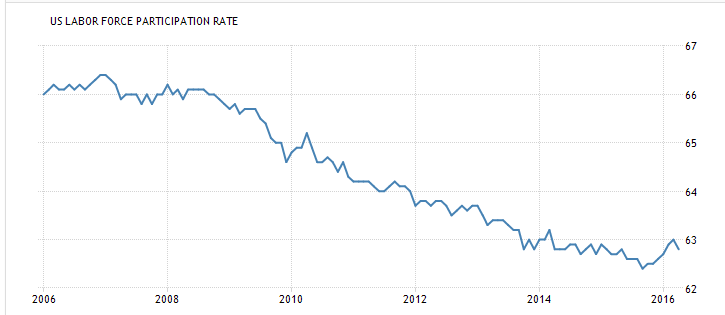
But while the unemployment rate has decreased since the 2008-2009 recession, the labor participation rate—the percentage of people who are either employed or actively looking for work—is historically poor, especially for a non-recessionary period.
The labor participation rate does not include the number of people who are no longer actively searching for work. During an economic recession, many workers become discouraged and stop seeking employment. As a result, the labor participation rate decreases. But while the participation rate does not include those who have no interest in working, the unemployment rate does. Thus, the participation rate helps provides context for the unemployment rate.
Beyond the significant number of Americans who feel discouraged about their work prospects, the decline of “discretionary income” is another factor many independent agents witness firsthand. Discretionary income refers to disposable personal income, minus taxes and all funds necessary to pay current bills and other essentials like food, clothing, medical expenses, transportation and shelter. In other words, discretionary income = gross income – taxes – all compelled payments.
Recent concerns have centered on the shrinking middle class and the inability of many working Americans to experience meaningful wage growth as measured by discretionary income. For many people, the major culprit has been the cost of medical insurance—and based on insurance rate carrier filings, it appears that 2017 will bring hefty increases. In states like New York, Pennsylvania and Georgia, carriers are seeking rate increases of 20% or more. In states like Florida and Maryland, rate increases could exceed 10%. In Indiana, Anthem is seeking a 28% increase, and in Oregon, Providence Health Plan is seeking a 30% increase. In Georgia, Human is asking for a 65% rate increase.
Consider an example: An employee makes $50,000 annually and has family health insurance that costs $20,000 annually. The employee contribution is $8,000 annually. If they receive a 3% raise—amounting to $1,500—and their share of medical insurance increases 15%—amounting to $1,200—they have a net raise of $300. With inflation hovering close to 2%, that means their discretionary income actually decreases, even after receiving a 3% raise. Plus, many employers are cost-shifting by raising deductibles and copays.
A recent Federal Reserve survey of American households found that almost half of adults say they can’t cover an emergency expense costing $400, or would resort to selling something or borrowing money to cover it. Insurance agents know when it comes to all types of insurance, it is generally cost-effective to raise deductibles to lower premium costs, as carriers like to reduce the cost of frequency.
But to make that possible, consumers need enough savings to absorb the deductible. Agents are on the front lines witnessing firsthand how difficult it is for many consumers to raise their standard of living. Independent agents are uniquely positioned to help their customers make the best choices for their particular financial situation. And it begins with a conversation—not a comparative rater.
Dave Evans is a certified financial planner and an IA contributor.
This month’s issue
The April issue is out now!